The absence of a hallmark on jewelry does not always indicate a fake. In some cases, this is permitted by law or explained by the specifics of the item's manufacture.
A gold hallmark is a set of three digits that is placed on the inner side of rings, bracelets, earrings, and other jewelry items. It indicates the proportion of pure gold contained in the alloy and serves as official confirmation of the authenticity of the precious metal.
Hallmark analysis is conducted in specialized laboratories that are part of the state registry. The methods of applying the hallmark and its appearance are strictly regulated. The law requires that a hallmark be present on all gold jewelry: this allows the state to control the circulation of precious metals, and buyers to be assured of the quality of the jewelry.
Gold Hallmark Systems
There are several systems for determining the hallmark that have historically formed around the world.
Metric System
The most common system. It is used in Russia, the CIS countries, Germany, Austria, and several other states. It shows how many grams of pure gold are contained in 1000 g of the alloy.
Karat System
Used in the USA, the UK, Italy, and some other countries. The alloy is conditionally divided into 24 parts. For example, 18 karats correspond to 75% gold, while 14 karats correspond to 58.5%.
Goldsmith System
In effect in Russia until 1927. The maximum hallmark was 96, which meant almost pure gold. Today, this system is considered outdated and is not used.
Lot System
Used in Europe during the Middle Ages. One weight standard was divided into 16 lots. It is also not used today.
Official Gold Hallmarks in Europe
In most European countries, the metric system is used; however, the list of officially recognized hallmarks and marking requirements may differ from those in Russia. The general principle in the EU is unified: the hallmark indicates the amount of pure gold in 1000 parts of the alloy.
Main Hallmarks Recognized in Europe
333 Hallmark
Contains 33.3% gold. Common in Germany and Northern European countries. This is the minimum allowable hallmark for jewelry in several EU states. The jewelry is durable but has a less saturated color.
375 Hallmark
Contains 37.5% gold. Often used for inexpensive jewelry. It has a more pronounced golden hue compared to the 333 hallmark.
585 Hallmark
Contains 58.5% gold. One of the most popular in Europe due to the optimal balance of strength and appearance.
750 Hallmark
Contains 75% gold. Widely used in France, Italy, Switzerland, and the UK. Characteristic of premium jewelry.
800 Hallmark
Contains 80% gold. Less common but officially recognized in several EU countries, including Italy. Often used in vintage and designer pieces.
833 Hallmark
Contains 83.3% gold. Traditionally used in Scandinavian countries and found in antique jewelry.
916 Hallmark
Contains 91.6% gold. More characteristic of the East but sometimes used in Europe, especially in ethnic jewelry.
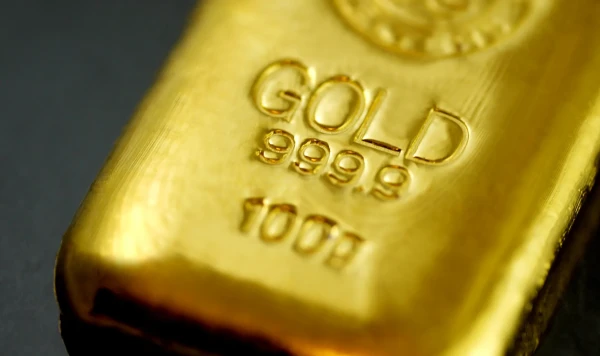
999 Hallmark
Contains 99% gold. Rarely used for jewelry in Europe due to the softness of the metal. Used for investment bars and coins.
Features of European Hallmarking
In many EU countries, the hallmark is applied by independent hallmarking chambers. In addition to the numerical designation, an additional hallmark is often used — a symbol of the state or hallmarking authority. In some countries, the sale of jewelry without mandatory state hallmarking is allowed if there is voluntary certification.
What Gold Hallmarks Mean
Knowing the hallmarks helps assess the quality of the jewelry, its wear resistance, and its real value.
Is there gold without a hallmark?
Yes. The hallmark may be absent on state awards, coins, gold leaf, antique items, or jewelry where the hallmark has worn off over time. It is also often not applied to custom-made items and jewelry from countries where hallmarking is not mandatory, such as Turkey.
How to Check a Gold Hallmark
The hallmark can only be accurately determined through professional expertise from a jeweler. Home methods — with acid, vinegar, or a magnet — provide only a general idea and do not guarantee the accuracy of the result.
Understanding the hallmarking system allows for informed choices when selecting jewelry, distinguishing genuine gold from fakes, and properly assessing a purchase.