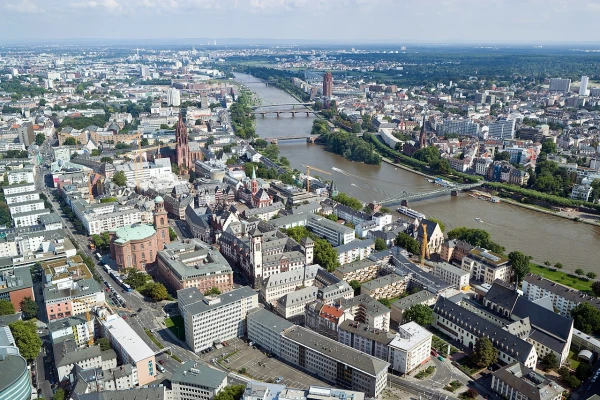
Depending on the time of year, there are always plenty of events and cultural offerings.
Frankfurt and the Baltic coast: nothing in common. Besides the fact that they have received solid recommendations. And something significant is happening here in 2026. Frankfurt has been declared the "World Capital of Design" this year and will host more than 200 events dedicated to this theme in the coming days and months. Additionally, a new Jewish Academy will open in the Westend district — a center for education and culture.
Visitors are also advised to explore the New Old Town of Frankfurt (the Römer quarter), where one can see a combination of historic half-timbered houses and modern architecture.
Depending on the time of year you visit the city, there are always plenty of events and cultural offerings — from picturesque walks along the river and open-air concerts to wine tastings in the summer, and festive markets and winter illuminations in the winter.
Tips for Your Trip
Thanks to the location of Germany's largest international airport, foreign tourists can easily land here directly when arriving in Germany from abroad.
Travelers journeying within the country can reach Frankfurt by train from most major cities.
With the city's developed transportation network, including the airport and train station, a stop here can easily be incorporated into longer trips across Germany or Europe. For example, those arriving from central or northern Germany can easily stop here on their way to or from Baden-Baden.
Think twice before booking a hotel too close to the city’s central train station. Although it is not as dangerous as sometimes reported, the notorious Bahnhofsviertel area can be, to put it mildly, quite unsightly. But it is colorful. We stayed there and had no problems.
Baltic Coast
The Baltic coast of Northern Germany is perhaps one of the country’s hidden gems for a peaceful nature getaway. That is why it was included in one of the recent rankings of the best places in Germany by Lonely Planet.
Germans certainly know the country’s coastline as a place for sandy beach and waves. But few travelers outside the country think about visiting German beaches, and some natural attractions, such as the Jasmund National Park on Rügen Island or the bird diversity on the Darss-Zingst peninsula, are definitely worth a visit.
Tips for Your Trip
The Baltic coast of Germany is dotted with peninsulas and islands of whimsical shapes. It is a masterpiece of nature and human creativity.
Among the major cities from which trips can be planned are Flensburg, Kiel, Lübeck, and Rostock, with numerous secluded coastal towns located away from the beaten tourist paths in between. Plus, resort areas like Heringsdorf, from where it’s just a step to Polish Świnoujście (Swinemünde). You can stand with one foot in Germany (oh, nude beaches!) and the other in Poland (compare prices!).
But if you have never been to the northeastern coast of Germany, a multi-day stay on Rügen Island is a great option. Here you can see the aforementioned Jasmund National Park with its white chalk cliffs, which are sometimes compared to the cliffs of Dover, as well as choose from countless campsites, beaches, and bays on the island to explore.
If you are looking for an exciting adventure with cycling and camping in nature, a summer trip to Rügen Island can also be a great option, as the island is large enough to cycle around in a couple of days or even a week, depending on your plans.
The only thing is: it can get quite crowded in good weather.
You can get here by car or train to Stralsund, which is nice in itself.
<iframe width="560" height="315" src="https://www.youtube.com/embed/FKQFw7e_J50?si=39wQGPPFhCAN104W" title="YouTube video player" frameborder="0" allow="accelerometer; autoplay; clipboard-write; encrypted-media; gyroscope; picture-in-picture; web-share" referrerpolicy="strict-origin-when-cross-origin" allowfullscreen></iframe>