
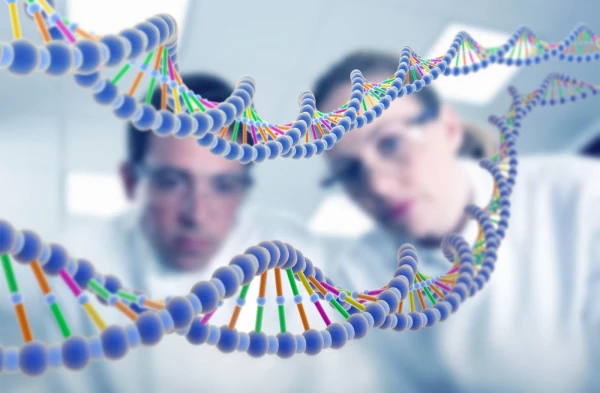
Modern research and experimental observations increasingly raise the question of whether a person's emotional state can extend beyond psychology and touch fundamental biological processes. The focus is on the possible connection between feelings and the behavior of the DNA molecule and the role of consciousness in interacting with matter.
Researcher and author Gregg Braden, in his program "Healing Hearts – Healing Nations: The Science of Peace and the Power of Prayer," addresses experiments that he believes unite science and the knowledge of ancient cultures. These experiments are viewed as an attempt to understand whether information and energy associated with emotions can affect living structures.
Experiment with Photons and DNA
Quantum biologist Vladimir Poponin conducted an experiment examining the behavior of photons in a vacuum near a DNA molecule. Initially, the particles of light were distributed randomly; however, after placing the DNA, they organized into a more ordered structure, seemingly orienting themselves towards it.
The most unusual finding was that even after the DNA was removed, the photons maintained their ordered state. This effect was interpreted as a possible manifestation of an unknown field of interaction between living matter and the surrounding space.
DNA's Reaction to Human Emotions
In another study, military scientists observed the reaction of leukocytes isolated from a donor's body to his emotional states. The cells were located at a significant distance from the person—up to tens of kilometers—yet changes in their activity occurred synchronously with the emotional surges of the donor.
The absence of a time delay between the experience of emotions and the reaction of the cells was interpreted as a sign of a connection that does not depend on conventional notions of space and distance.
The Heart, Emotions, and DNA Structure
The HeartMath Institute investigated the impact of consciously induced emotions on DNA samples. Participants were trained to enter states of love, gratitude, fear, or irritation, after which changes in the structure of the molecule were recorded.
With positive emotions, DNA showed a tendency to elongate and "relax," while with negative emotions, it tended to condense and twist. These changes were linked to biochemical reactions in the body and the activation of certain genetic processes.
A particularly pronounced effect, according to researchers, was observed in HIV patients: in states of joy and love, their resilience indicators increased significantly compared to states of stress and fear.
Implications of These Observations
The authors of such studies suggest that emotions may not only be a subjective experience but also a factor influencing biological processes. In this interpretation, feelings are viewed as a kind of mechanism for human interaction with a broader energetic and informational environment.
Gregg Braden emphasizes that the focus of attention plays a key role. Constant concentration on fear and anxiety, in his opinion, amplifies destructive scenarios, while states of gratitude, love, and inspiration can support processes of recovery and adaptation.
Practical Conclusion
Even considering the controversial nature of such experiments, researchers agree on one point: emotional states are directly linked to physiological well-being. Regular moments of joy, inner peace, and gratitude can contribute to reducing stress and maintaining the body's overall balance.













Leave a comment