
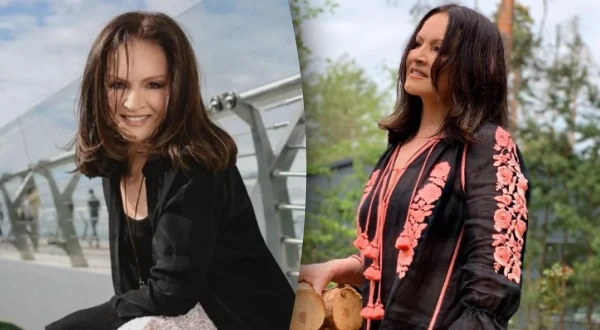
At home, the singer's family spoke only Moldovan.
Singer Sofia Rotaru carefully protects her privacy after the start of the war. The artist does not give concerts and rarely appears on social media, only speaking out on special occasions and to honor the memory of the victims of the Russian-Ukrainian war. Last summer, Rotaru posted photos from Kyiv, leading fans to speculate that she resides in Kyiv.
Ukrainian singer Oksana Bilozir revealed unexpected facts about the life of her stage colleague, the legendary artist Sofia Rotaru. In an interview with Dmitry Gordon, she admired Rotaru's clear civic stance. Oksana unexpectedly disclosed that Rotaru still occasionally gives concerts, although she does not perform publicly.
"I really admire this. I take her as an example. She looks great, has concerts from time to time, but has suffered from the war," the singer shared.
The artist revealed that Sofia consciously chose not to stay in Crimea and returned to Kyiv, showing her support for her homeland.
"She made a choice — she did not stay in Crimea. She came to Kyiv. Here her husband is buried. Here she is loved and respected — that is what she needs most for her soul at this time," Bilozir commented.
Sofia Rotaru was born on August 7, 1947, in the village of Marshyntsi in the Novoselytsia district of the Chernivtsi region of the Ukrainian SSR (now a village within the Novoselytsia urban community of the Chernivtsi district of Chernivtsi region of Ukraine), in a family of Moldovan peasants. Due to a mistake by the passport officer, who recorded the date of birth as August 9, 1947, she celebrates her birthday twice. She was the second of six children. Her father, Mikhail Fedorovich Rotaru (Rotar; 1918–2004), a brigade leader of grape growers, was drafted into the Red Army in May 1944, fought as a machine gunner, and reached Berlin. He was wounded and returned home in 1946. Her mother, Alexandra Ivanovna Rotaru (1920–1997). Her older sister Zinaida suffered from typhus in childhood and lost her sight. Zina, possessing perfect pitch, easily memorized new songs and taught Sofia many folk songs. Zina spent a lot of time by the radio, learned Russian along with the songs, and taught it to her brothers and sisters; at home, the Rotaru family spoke only Moldovan. In her childhood, Sofia Rotaru worked a lot around the household and helped her parents sell at the market.










Leave a comment