
It is quite likely that this was an offering to the gods.
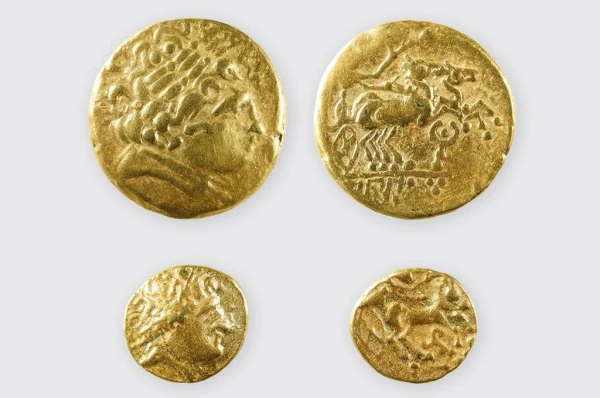
In a Swiss bog, volunteer archaeologists discovered two rare Celtic gold coins that were likely left there as offerings to the gods. This was reported by Livescience.
As the archaeologists noted in a statement, these coins were minted nearly 2300 years ago - around the mid-3rd century BC.
"This makes them part of a very small group consisting of just over 20 known examples of the earliest Celtic coins from Switzerland," they stated.
One of the coins is a stater weighing 7.8 grams, while the other is a quarter stater weighing 1.86 grams. The term "stater" refers to an "ancient Greek coin." In the late 4th century BC, the Celts of continental Europe, who often served as mercenaries, were paid with Greek coins. Subsequently, they inspired the creation of Celtic coin minting in the early 3rd century BC, when their imitations began to appear.
In this case, the Celts imitated gold staters minted during the reign of Philip II of Macedon - the father of Alexander the Great. Both coins feature the profile of the Greek god Apollo on the obverse ("eagle") and a two-horse chariot on the reverse ("tails").
However, the found coins differ somewhat from their Greek prototypes. In particular, on the reverse of the smaller coin, a triple spiral can be seen beneath the horses. This symbol, known as a triskelion (or triskel), is often found in Celtic art.
The rare find was discovered largely intuitively. In 2022-2023, volunteer archaeologists from Archaeology Baselland - the local archaeological service - found 34 silver Celtic coins in the same area. This refers to the Berenfels bog near the municipality of Arisdorf.
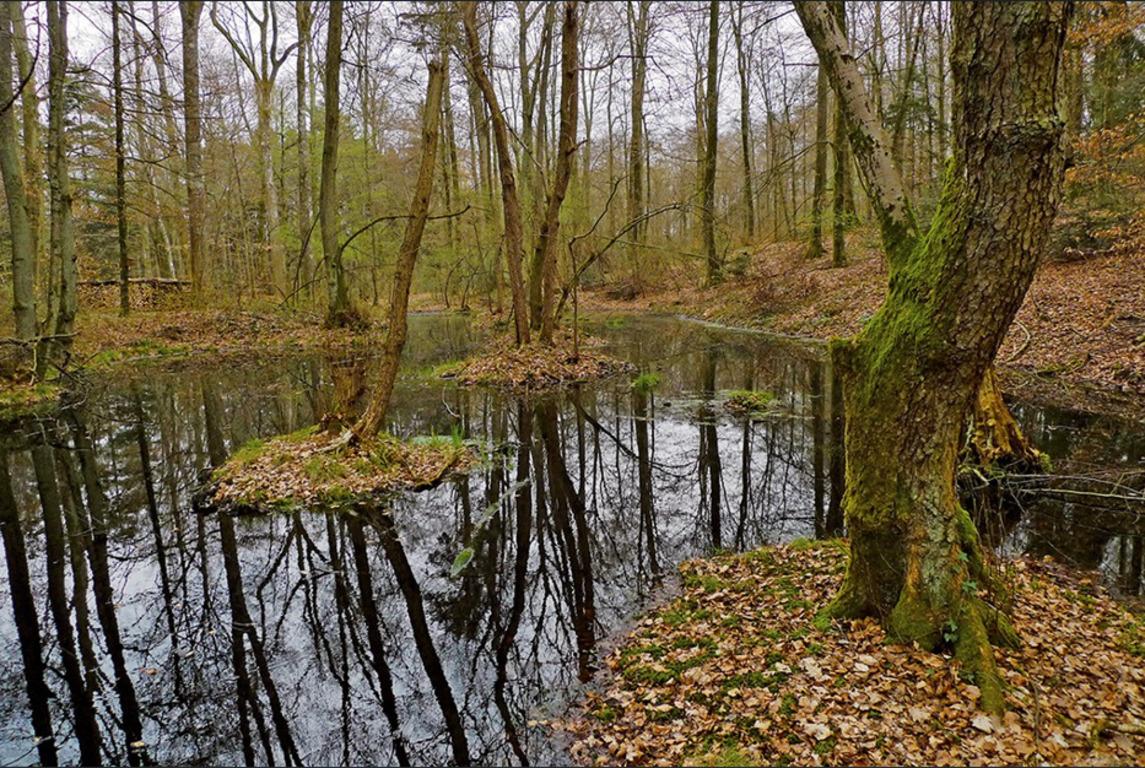
This prompted Wolfgang Niederberger and Daniel Monu, also volunteer archaeologists, to conduct further research in the spring of 2025, during which they found the two gold coins.
According to specialists, it is quite likely that these coins were placed in the bog as offerings to the gods. Experts believe that Celtic gold coins were not used for everyday transactions - they were too valuable, the statement says. They could have been used as wages, diplomatic gifts, gifts to supporters, a means to achieve political goals, or as dowries.
Both gold coins, along with the silver finds from the same location, will be presented at a special exhibition in Basel, which will open in March 2026.
















Leave a comment