
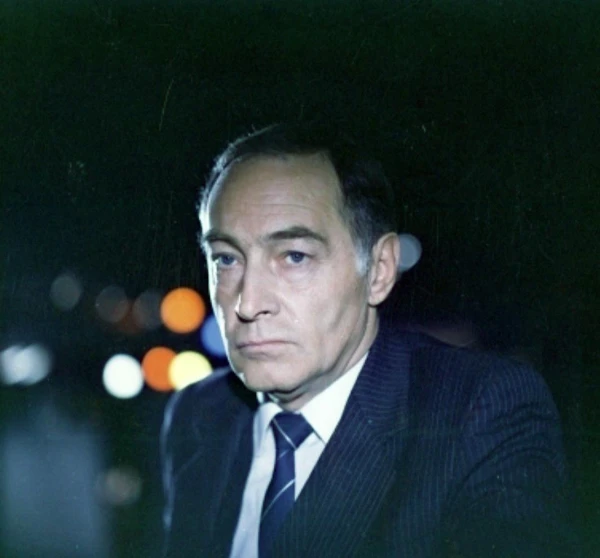
The public favorite was closed and silent.
The aspiring student was not wanted at the theater university, but in the end, he managed not only to receive a specialized education but also to become a idol for millions. However, success did not protect Vyacheslav Tikhonov from disappointments and losses.
Vyacheslav Tikhonov was born on February 8, 1928, in the small town of Pavlovsky Posad near Moscow. Together with his father, a worker at a weaving factory, his mother, a kindergarten teacher, his grandmother, and grandfather, Slava lived in a two-story wooden house, which later became a memorial museum.
With the onset of the Great Patriotic War, the 13-year-old teenager went to a vocational school, after which he got a job as a lathe operator at a military factory. In the evenings, the young man went to the cinema to watch films about Chapayev and Alexander Nevsky, dreaming of appearing on screen. His parents envisioned their son as an agronomist or engineer, but a year after enrolling in the Automobile Mechanical Institute, Tikhonov decided to storm VGIK.
At first, the applicant was told that he was not photogenic, but he was eventually accepted into the author’s course of Boris Bibikov and Olga Pyzhova — there was a shortage of guys in acting universities during the post-war period. During his studies, Vyacheslav played Volodya Os'mukhin in "The Young Guard," but after that, he had to wait a whole decade for bright roles. What else did Vyacheslav Tikhonov lack luck in? December 4 marked the 16th anniversary of the artist's death, and we remember his amazing story.
In the early 50s, the artist first stepped onto the stage — at the Theater Studio of the Film Actor. The thing is that after graduating from VGIK, offers from directors were almost nonexistent: Tikhonov received small roles in the films "Maksimka," "Taras Shevchenko," and "This Cannot Be Forgotten," but the films he participated in were released less than once a year. The theater was also in no hurry to load the artist: in seven years, he played in only five performances. The most notable work of that time was the role of the Bear in "An Ordinary Miracle," directed by Erast Garin. Later, Garin adapted Schwartz's play into a film, but the main role was given not to Tikhonov, but to Oleg Vidov.
In 1957, Tikhonov received an offer from the Gorky Film Studio and decided to finally leave the stage. At that time, Stanislav Rostotsky, who had seen the actor on stage, invited Vyacheslav for the lead role in the film "It Happened in Penkovo." The artist was to play the tractor driver Matvey Morozov — the first guy in the village. A problem arose immediately: Vyacheslav Tikhonov's refined appearance did not fit the image of a collective farm worker. He had to lighten his eyebrows and walk swaggeringly to rid himself of the label of a city dweller.
Rostotsky's film brought the first portion of fame to both Tikhonov and his co-star Svetlana Svetlichnaya. Soon, the actor was being lured into roles of Russian intelligentsia: Ilya Melnikov from "We Will Live Until Monday," Andrei Bolkonsky from the film "War and Peace."
In the latter film, the character was recommended by none other than Ekaterina Furtseva, although Tikhonov himself did not feel close to the character: four years of filming drained him completely. The situation was different with the TV series by Tatyana Lioznova "Seventeen Moments of Spring" — the silent Isaev/Shtrilitz had much in common with Vyacheslav Vasilievich.
The film became a cult classic, and all the actors in key roles — Bronyev, Tabakov, Yevstigneyev — woke up famous. Tikhonov was the most "affected": for most viewers, he forever remained Shtrilitz, so the work turned out to be both an achievement and a curse. At the same time, when in 2009 a color version of the series was released, Vyacheslav Vasilievich reacted painfully, believing that the colorization destroyed the director's intent.
Later, the artist starred in the legendary film "They Fought for Their Country," appeared in the heartbreaking film by Rostotsky "White Bim Black Ear," and transformed into a KGB general in "TASS Is Authorized to Declare..."
In the late 80s, Vyacheslav Tikhonov experienced a crisis due to a change in ideology, and the number of significant roles in his filmography decreased — Sergey Solovyov noted that the artist could not accept the new era and even refused to lead an acting workshop at VGIK. Nevertheless, the star appeared in the film "Love with Privileges," which conveyed the spirit of perestroika.
The actor refused to play corrupt officials and alcoholics, but shone in the films "The Tired Sun," "Boulevard Romance," and "Waiting Room." Biographers wrote that the artist no longer derived satisfaction from work, and only the role in the film "Essay for Victory Day" fully satisfied him. Tikhonov last appeared on screen in the film "Andersen. A Life Without Love," portraying God.
Vyacheslav Tikhonov met his first love while still in school: the eighth grader began courting Yulia Rossiyskaya. "We fell in love at first sight. We were inseparable for three years. He treated me very tenderly! He gave me flowers. We were happy together," Yulia Alekseevna confessed.
After graduating from school, Vyacheslav suddenly disappeared — he went to enroll in a university. Soon, Yulia learned that a classmate, Nonna Mordyukova, was pursuing the guy. Nevertheless, the student continued to visit Pavlovsky Posad, torn between his first love and the actress. Rossiyskaya wanted certainty, so when her future husband Vladimir began courting her, she reciprocated. "But Slava still wouldn’t let me go. Whenever he came, it was love again! When it became known that Mordyukova was expecting a child from Slava, I realized: that’s it! But Slava continued to come. And we ran to each other, throwing ourselves into each other's arms. Because we felt: we could not live without each other. And then you come home and realize that nothing can change. I cried," Yulia confessed.
Rossiyskaya believed that Tikhonov did not truly love Mordyukova, while the actress wrote the same about Yulia in her memoirs. In any case, the artist married Nonna, and in 1950 they had a son, Vladimir. The fate of the heir turned out to be tragic, as he passed away at 40 due to harmful addictions.
"In my son's illness, Tikhonov blamed me. Well, as always, there was no shoulder on which I could cry. I will manage on my own now," Nonna Viktorovna wrote in her diary. The couple separated long before the tragic death of their son — after 13 years of marriage. Those around them insisted: the lively singer Mordyukova and the reserved, silent Tikhonov were initially too different. Nonna Viktorovna perceived her husband's restraint as indifference, however, when the actress began an affair with Boris Andronikashvili, her loving husband was ready to forgive the unfaithful wife. He gave her three months — a sufficient time for passion to fade — but the star of "Rodnya" did not return.
There was also another version of Tikhonov's divorce: it was said that the actor had fallen in love with Dzidra Ritenberga.
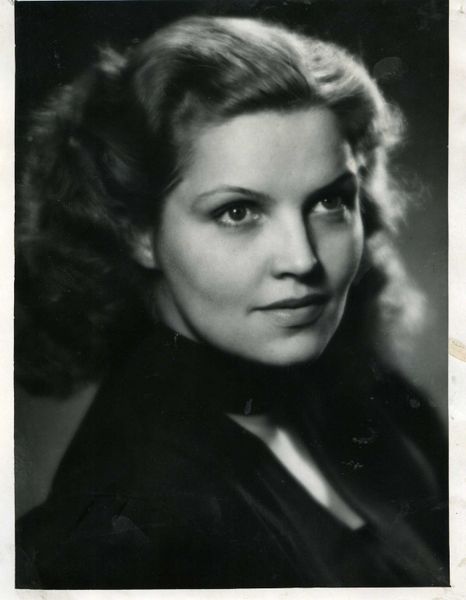
Even if that were the case, the actress from Riga preferred Evgeny Urbansky to Vyacheslav, while our hero met translator Tamara Ivanovna during the dubbing of the French film "A Man and a Woman."
The lovers got married, became parents to a daughter, Anna, who followed in her star father's footsteps, and spent 42 years together. In 2005, the heiress gave birth to twins Georgy and Vyacheslav, whom Tikhonov adored. In his last years, the star of the film "Seventeen Moments of Spring" lived in a dacha in Nikolina Gora. He rarely communicated with the press, earning a reputation as a recluse. In 2002, the artist suffered a heart attack, and in 2008, he underwent surgery, but a year later, another surgical intervention was required due to vascular problems. Soon, the 81-year-old actor's organs began to fail, and on December 4, 2009, he passed away.





Leave a comment