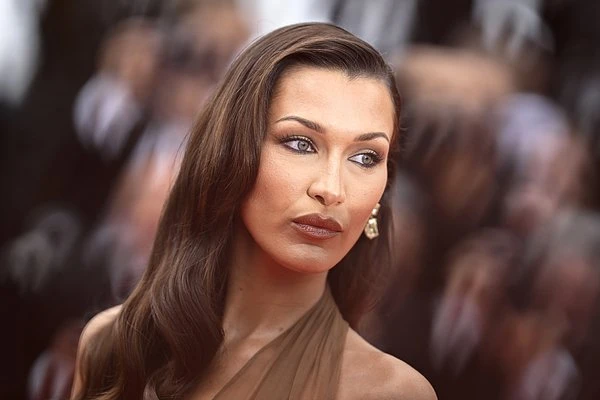
In the age of social media, the cult of unemotionality is expressed not in character but in appearance.
The rules of 'eternal youth' in the modern world have turned out to be surprisingly simple. Today, scrolling through social media feeds, every woman automatically absorbs them: one must not frown when anger arises, one must not purse lips while sipping a drink, one must not smile too widely in photographs or squint in the sun, one must not wrinkle the forehead in surprise, and most importantly — one should not laugh too loudly or too often. According to these instructions, the ideal image is an indifferent face, completely devoid of expression. Centuries ago, women who publicly displayed strong emotions were shamelessly ostracized from society. Nowadays, disapproval manifests more delicately — through a new beauty trend suggesting to 'freeze' one's face 'for their own good.' Why do girls learn to turn off their emotions for the sake of external attractiveness?
A Dead End
Historically, any vivid emotion expressed by a woman was branded as a sign of hysteria and inadequacy. In the 19th century, girls deemed hysterical by doctors were subjected to forced treatment. To 'calm' them, heavy sedatives were used, and sometimes — cruel tortures with electric shocks in psychiatric clinics. Moreover, for a woman to be declared insane and dangerous to society, it was enough for her to express anger or despair vehemently.
Patriarchal norms have instilled for centuries that a true lady never loses her temper. Irritation or tears from an aristocrat in the Victorian era were considered a disgrace to the entire family, while the ideal was a quiet, meek wife who concealed any distress behind a smile. The system placed women in a double bind. On one hand, if she showed emotions, she was immediately labeled a hysteric. On the other — she was tagged as a 'cold bitch' if she maintained a strict and dry demeanor.
Sarah Stickney Ellis — one of the most influential writers of that era — published guides on 'proper behavior for women.' These books were read everywhere — from middle-class families to high society. In them, Ellis insisted that the most important virtue for a woman is unwavering self-control, and that 'a true lady must suppress irritation so as not to darken the domestic hearth.' The author emphasized that a woman should hide her suffering because tears or outbursts of anger could 'undermine the respect of those around her and bring unnecessary shame to the family.'
In her 1839 book 'Women of England,' Ellis claimed that a wife must maintain calmness and a pleasant expression, even when facing difficulties — for her changing mood 'creates disorder in the moral atmosphere of the home.'
And although women were no longer electrocuted in the last century, they were still expected to show humility and a sincere desire to please men. This was even conveyed in advertising. For example, in a campaign by the American coffee producer Folger, a wife is depicted worrying that her husband did not kiss her goodbye. The issue was the unappetizing coffee she served him for breakfast. 'The solution? A cup of Folger coffee — and your marriage is saved,' the slogan proclaimed.
Today, women are no longer forced to hide their emotions, but there are other unspoken demands. Helly Bock, head of Fierce Inc., a leadership and communication training company, notes that the stereotype of the Ice Queen — a flawlessly beautiful but unfeeling woman — has taken root in popular culture. From various snow queens in children's fairy tales to film heroines like Miranda Priestly from 'The Devil Wears Prada,' a successful woman is often portrayed as cold and unflappable. This image is convenient for patriarchy: such a woman does not irritate and demands nothing.
No Drama
In the age of social media, the cult of unemotionality is expressed not in character but in appearance. On social media, girls are taught how to immobilize their faces to supposedly preserve beauty and youth for a long time. The feeds are filled with life hacks: for example, where to buy a special anti-wrinkle straw to avoid ruining the skin around the lips; how to tape the face at night to fix expressions; which habits to urgently eradicate to prevent forehead lines.
Videos under the hashtags #facecontrol, #frozenfacepractice, and #trainyourface are gaining popularity on TikTok, teaching girls to talk and laugh without moving any part of their face except for their lips. The once fashionable duck face has been replaced by a new internet trend called dissociative pout or lobotomy chic, where emotions seem intentionally removed from the frame.
As an example, PetaPixel cites TikToker Naru Smith, actress Chloe Cherry, and singer Billie Eilish, who pose with vacant expressions and faces devoid of expression. Journalists describe this facial expression as 'dead eyes, an emotionless mouth, and an overall aura of a photogenic corpse.'
The lips remain slightly puffed, and their corners turned down, expressing neither a smile nor overt sadness. The goal is a mask of apathy, demonstrating maximum detachment and indifference. It suggests that the owner of such a facial expression is already saturated with all the pleasures of life and nothing evokes feelings in her.
To achieve external impassivity, both injections and psychological practices are employed. Cosmetology offers a reliable solution — Botox. Today, more and more women in their 20s and 30s are seeking so-called baby Botox — small preventive doses that preemptively prevent the appearance of wrinkles. According to the International Society of Aesthetic Plastic Surgery, over 65 percent of Botox consumers worldwide are now under 50, with 24 percent of them aged 18 to 34.
In the U.S., the number of girls getting 'beauty injections' at a young age increased by 41 percent in the first half of the 2010s. Many start at just 23, without a single wrinkle.
Australian singer and television presenter Dannii Minogue admitted that she had Botox during difficult periods in her life, as if trying to erase her emotions from her face in tough times. 'She literally blocked the ability to frown, thus hiding her feelings,' commented British psychotherapist Anoushka Groves on this case.
At the same time, 'personal growth gurus' advise literally to 'reset' emotions for the sake of inner harmony. Practices of a female pseudo-Stoic philosophy are gaining traction online, where women are encouraged to let go of not only negative but also positive experiences. Such emotional asceticism is presented as a path not only to external attractiveness but also to success in romantic relationships.
Thus, in a video titled 'Control Your Emotions to Restore Power in Relationships,' coach Natalie Claris suggests a strategy: no reactions, no tears, no drama. 'As soon as you stop throwing tantrums, you begin to control not only yourself but also the relationship,' she says.
And blogger Cassandra Norwood published a viral post in which she called accepting life changes without drama a sign of maturity. 'Maturity is when you stop asking people why they no longer call or text you. You just notice the changes and accept them without fights, without quarrels. You just walk away with a smile,' she reflects, calling such behavior an example of Stoicism in everyday life.
Beauty or Life
Another revelation was shared by television star Kim Kardashian. In 2019, when asked by a fan about the secret to her smooth skin, the celebrity jokingly replied: 'Don’t smile.' At that time, social media users took it humorously and turned it into a meme. But later, Kardashian explained that after the birth of her first child, when haters began to shame her for the weight she had gained, she consciously stopped smiling in public.

However, many social media users are concerned about the trend towards indifference. 'I still get injections and believe that you can be a feminist with a made-up face. But I increasingly notice that all the girls around are going to great lengths for youth, while men just age and don’t care. There’s a sense of injustice,' complained 40-year-old Sally from the UK, who has been using Botox and fillers for over ten years.
'I like the result, but the truth is that if you want to have certain opportunities in society, you have to look a certain way. There’s even a joke that a man asks a woman about her hobbies, and she replies: 'Look at me — that’s my hobby.'
And 34-year-old Allison from Australia got her first Botox injection at 23 to look like a colleague with a flawless face. Without a single wrinkle, she felt that her skin became even tighter — and she couldn’t stop. A decade later, Allison realized she was tired of her dependency. 'Botox used to be a way to control my image and become someone else, but now I’ve decided to give myself the right to age and watch how my face actually changes,' she shared.