
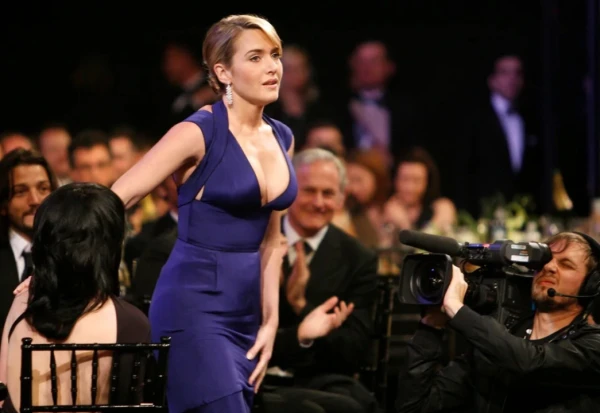
The "English rose" has everything one could wish for.
Recently, actress Kate Winslet entered her sixth decade, with her most famous role in cinema being Rose DeWitt Bukater from James Cameron's film "Titanic." After the film's success, the actress continued her career and gained recognition from both audiences and critics. Such is the life and career of the Oscar winner, five-time Golden Globe winner, three-time BAFTA winner, two-time Emmy winner, and recipient of the honorary César award.
She was born in the English town of Reading, Berkshire. As is known, a creative profession does not shine with stability, so her father was forced to constantly take on odd jobs, while her mother worked as a waitress and nanny. Her family lived so poorly that they were entitled to free meals from the government. When Kate was only 11 years old, her father, Roger Winslet, suffered a severe leg injury. By that time, the actress had already appeared in commercials, but after the incident, she began to work even more.
She first took to the stage at the age of five, playing Mary in a school production of "The Christmas Play." Her peers teased the budding actress about her appearance and figure.
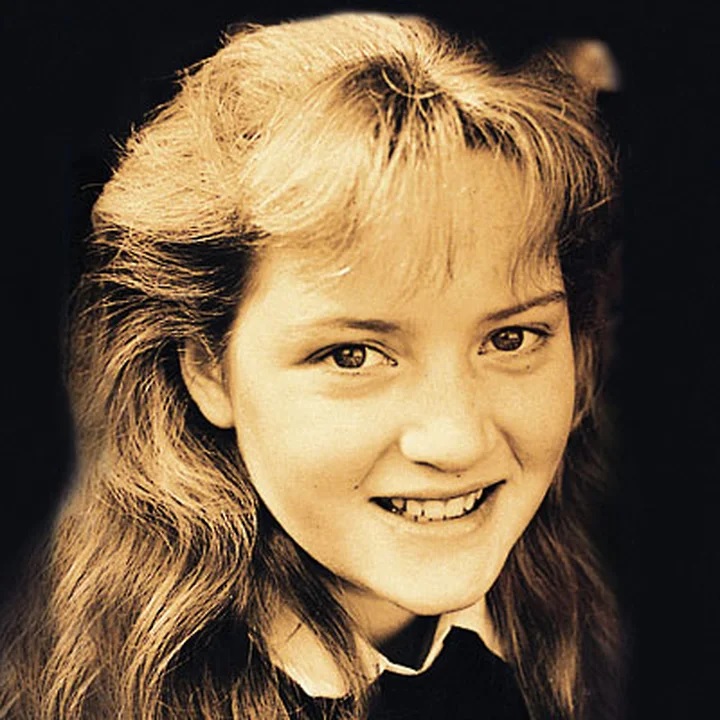
In 1994, she made her debut in the film "Heavenly Creatures," which garnered enthusiastic acclaim from critics.
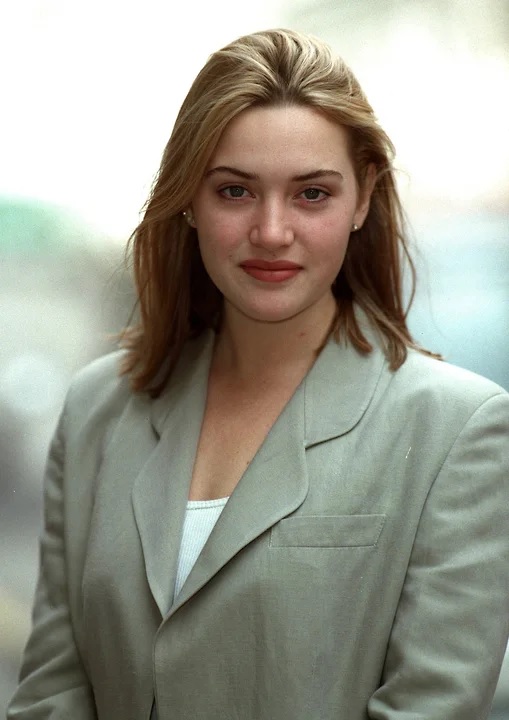
With her delicate face (no wonder she is called the "English rose"), Kate, however, from the early stages of her career took on roles of complex women who sought freedom through winding paths. Initially, these were troubled girls with inner turmoil: from Marianne Dashwood in Ang Lee's adaptation to Ophelia in Kenneth Branagh's "Hamlet."
In her star role, Rose from "Titanic," an interesting transformation began. She was still a fragile-looking woman with a rich inner world, but there was clearly a core within her that allowed her to reject wealth for true love.
But the most unparalleled fame came to Kate from the 1997 film "Titanic," which grossed $2,000,000,000 worldwide.
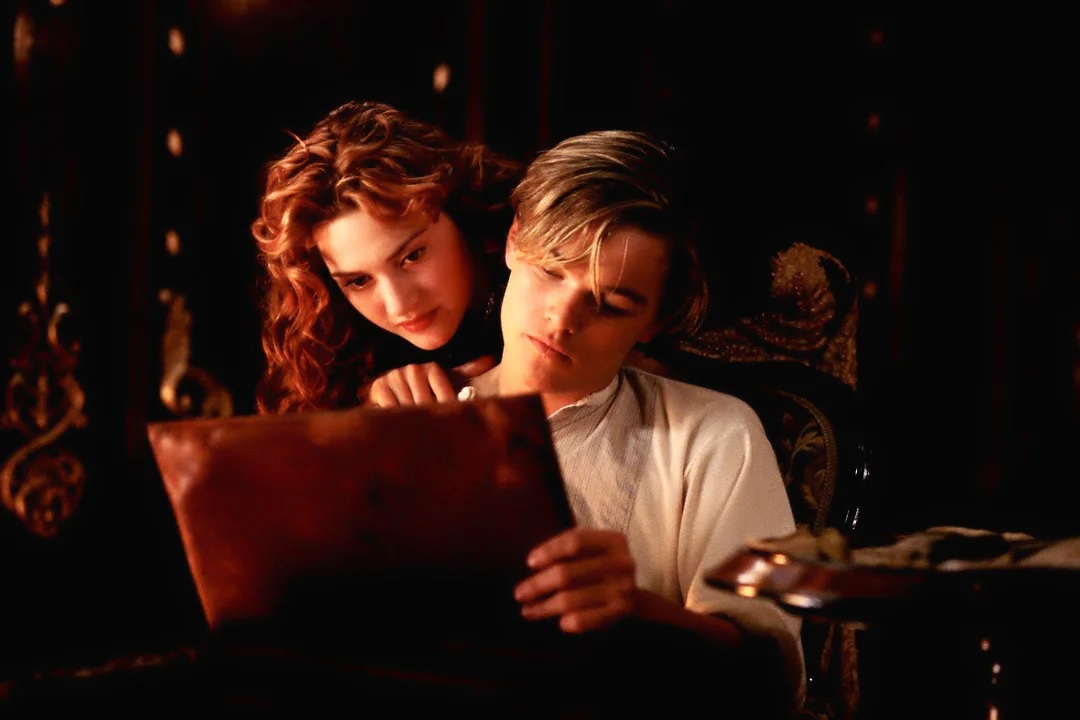
"Titanic" is one of those films that even those who are not interested in cinema and have spent years in a completely sealed bunker know about. The most expensive and grand film of its time, it won eleven Oscars and earned insane money at the box office, nearly costing Winslet her health: she suffered from hypothermia during filming.
However, everything turned out fine, and the film's success opened many doors for the actress, as well as gifted her a close friend, Leonardo DiCaprio, with whom she heartbreakingly portrayed one of the greatest love stories on screen.
Leo even gifted her a "friendship ring" with a special engraving, the content of which the actress, however, does not disclose. She also developed a warm relationship with Cameron: after she got the role in "Titanic," Kate even sent the director a bouquet of roses. Many years later, he invited her to star in the sequel to "Avatar," one of his most powerful blockbusters.
For her role as Rose, the actress received her second Oscar nomination—she was only 22 years old at the time. The award that time went to Helen Hunt for "As Good as It Gets," but Winslet did not despair. Many other actresses in her place would have rushed to replicate that commercial success after such a role. But Kate, as a true creator, was interested in something else. She turned down participation in hits like "Shakespeare in Love" and "Anna and the King."
Instead, she played the rebellious traveler Ruth Barron in Jane Campion's drama "Holy Smoke," which received mixed reviews. Whether it was a flop or a hidden gem is a question that film critics and audiences still ponder. But according to the actress, it was working with Campion that gave her true acting fearlessness.
Her encounters with television are rare but impactful. A funny cameo in "Extras," a striking performance in Todd Haynes' "Mildred Pierce," and the hit "Mare of Easttown." For the last two roles, Kate earned Golden Globes and Emmys. In the relatively recent "Mayor of Easttown," she played an eccentric woman dictator. This is also an interesting turn, as the actress still rarely portrays villains on screen, but such roles greatly attract her. They also fit well into the arc she has created of independent and complex women who are stormy inside. Even in the "Divergent" franchise, Winslet was drawn to the idea of playing an "intellectual villain."
Kate Winslet has everything one could wish for, but she clearly has no intention of resting on her laurels. The actress continues to experiment, appearing in bold projects like Francis Lee's "Ammonite," and her voice in the industry remains very loud. In 2021, she founded the production company Juggle Productions. Winslet wants to bring to life stories "where women, courage, and truth are in the spotlight." It is clear that for her, this is not just a status line in her resume.









Leave a comment