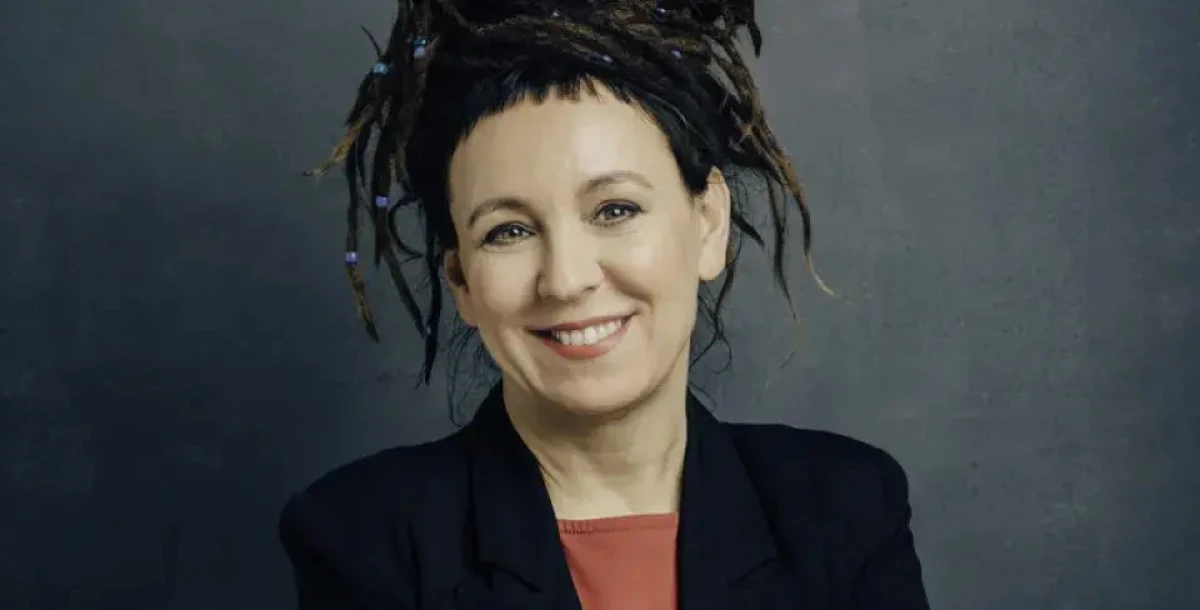
Polish writer and Nobel Prize laureate Olga Tokarczuk revealed that she applies artificial intelligence in her work on her books. According to the author, modern language models help her develop ideas and seek unexpected creative solutions.
In a recent interview, Polish writer and Nobel Prize laureate Olga Tokarczuk admitted that she uses artificial intelligence to write books.
This was reported by the Polish publication My Company.
The interview sparked discussions, particularly in the Literary Hub community – a daily literary website dedicated to the best examples of prose, poetry, and literary criticism.
Olga Tokarczuk confessed that she acquired an advanced version of one of the language models and was amazed at how much it "broadens horizons and deepens creative thinking." The writer mentioned that she often turns to AI for help in developing specific ideas for her text. She writes prompts for the model like: "Dear, how could we beautifully develop this?"
The writer provided an example of using artificial intelligence while working on her new book. She asked the language model to suggest what songs the characters in her novel could have danced to several decades ago. The AI offered several options and ended with the name of the Polish group Golec uOrkiestra, but with a mistake – Golec Łorkiestra.
Despite numerous errors, this technology, in the writer's opinion, can be an advantage in the field of fiction.
At the same time, Olga emphasized that she misses the era when literature was a matter of life and was created over months.
The Literary Hub community split into two camps. Some argue that using artificial intelligence for research "is quite permissible and, to some extent, equates to consulting with other experts, so the author has not crossed a line." At the same time, there are comments suggesting that Olga views her book "only as a commercial project that needs to be published as soon as possible." Some believe that asking artificial intelligence to develop a story is too much interference in the creative process.
Tokarczuk also noted that her new project will likely be the last of her career, as the modern book market effectively does not allow authors to economically recoup years of work on large novels. Olga Tokarczuk's new novel is set to be released in the fall of 2026.
In the editorial's opinion, Olga Tokarczuk's admission is yet another confirmation that artificial intelligence is gradually becoming a part of the creative industry. Meanwhile, the discussion about the boundaries of what is acceptable in literature is likely just beginning.