
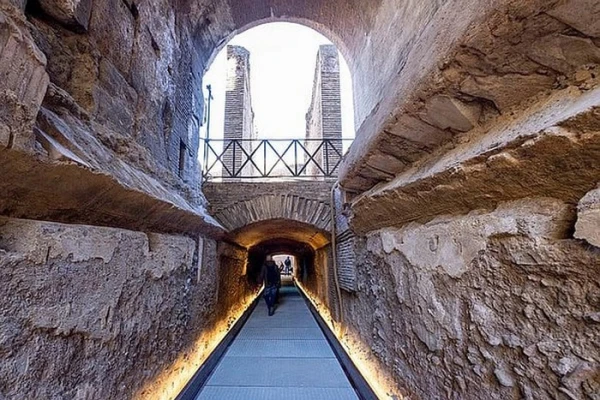
Rome has accelerated the restoration of historical monuments thanks to funding from the European Union — funds were allocated to the Colosseum, in particular. The money was provided under the PNRR program, part of the Next Generation EU initiative aimed at restoring and preserving cultural heritage after the pandemic.
As architect Barbara Nazzaro explained, additional funding has allowed for the completion of the restoration of the Corridor of Commodus - the secret tunnel of the emperors leading to the arena of the Colosseum - making it accessible, including for people with limited mobility. During the work, architectural barriers were removed and a transformable staircase-platform was created for descending to the lower level.
The Corridor of Commodus, carved in the 1st–2nd centuries AD, has an S-shaped form and is adorned with niches depicting scenes of ancient Roman spectacles. The work was carried out under challenging underground conditions and will continue — ahead lies the restoration of walls and decorative elements.
The restoration program also included the House of Griffins and the Schola Praeconum building on the Palatine, where frescoes and lost polychromy were restored during the work.







Leave a comment