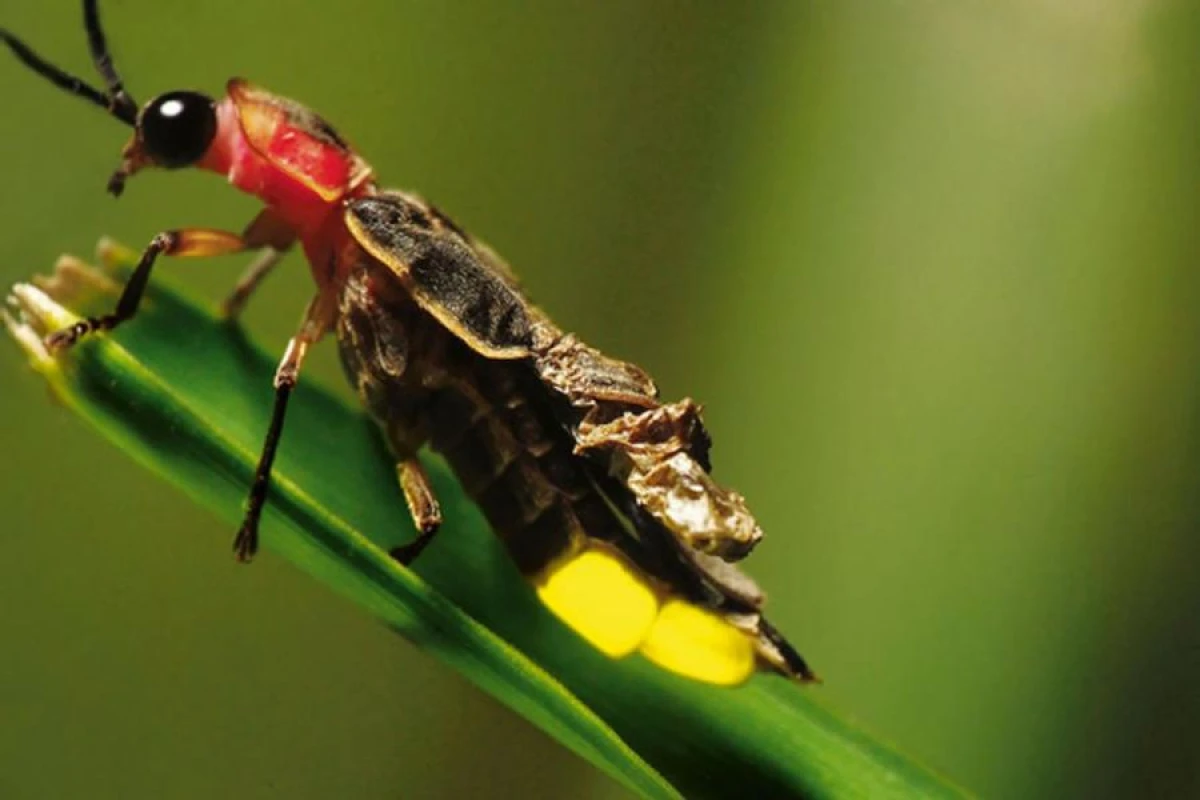
Fireflies use their glow to attract partners.
The family of fireflies includes about 2000 species, most of which inhabit tropical and subtropical regions.
The ability to glow is often present in both sexes, but manifests differently. In some tropical fireflies, the female emits a greenish light while sitting on the ground. If a passing male notices this signal, he activates bright orange lights on his abdomen and heads towards the female.
In the only species of fireflies found in our latitudes, only females glow, as the light emitted by males is too weak to be noticed even in complete darkness. Thus, the wingless and less mobile females signal the winged males about their location and readiness to mate.
Our fireflies can glow more or less evenly, although they can turn their “flashlights” on and off at will. At the same time, many tropical species prefer rhythmic flashes, and the signals of some firefly species differ only in rhythm. This is used by females of one American species: after mating, they begin to flash in the rhythm characteristic of females of another species. The male intruder attracted to this signal is cunningly eaten by the female, thus obtaining the necessary protein food for the development of her offspring.