
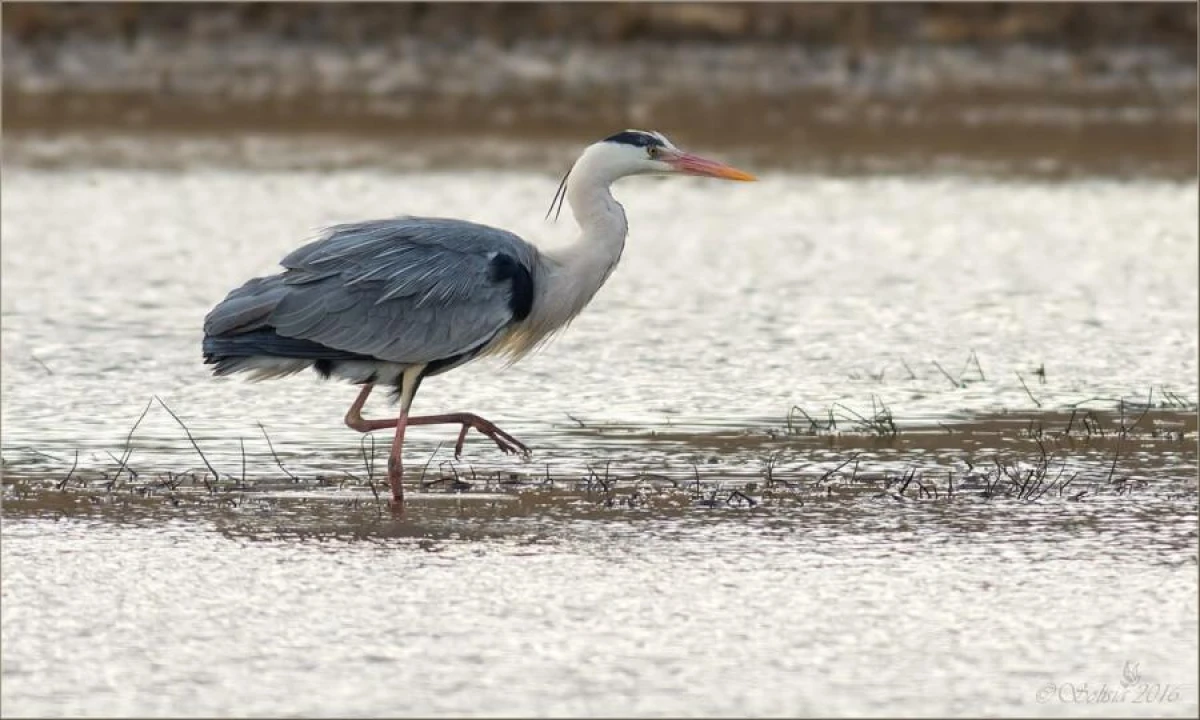
To avoid freezing.
The heron hunts for aquatic animals by standing still for long periods in the water. The water is usually colder than the bird's body temperature. Since its legs are not protected even by feathers, the heron reduces their blood supply to conserve heat.
However, tissues cannot be kept in this state for too long. Therefore, the bird tucks one leg close to its body, allowing blood to circulate in it as usual. From time to time, the heron changes its supporting leg.
There is another reason: to catch prey, the heron often needs to take one or two quick steps. The tucked leg, ready for movement, allows it to gain time — fractions of a second that can be crucial for successful hunting.









Leave a comment