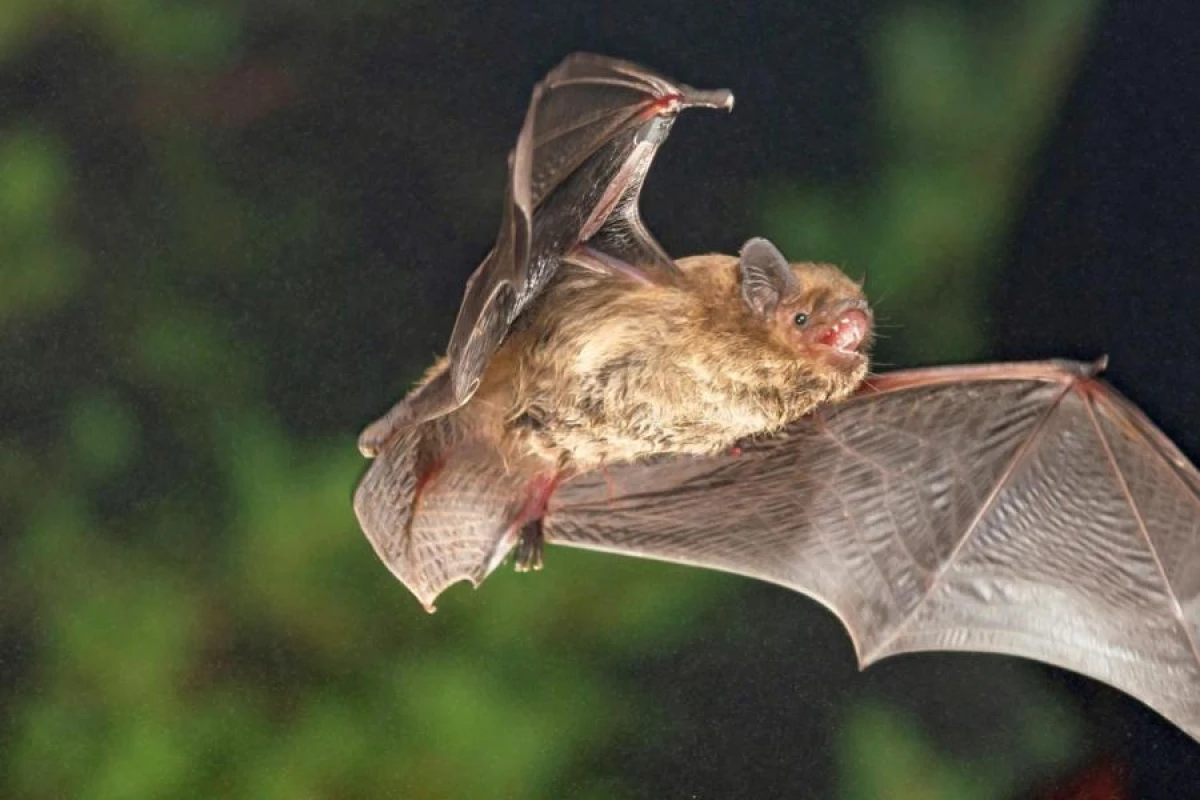
Research by scientists from the University of Naples Federico II has shown that bats can produce sounds resembling the buzzing of wasps to protect themselves from predators.
Italian scientists have discovered that large noctules are capable of producing sounds that differ from their usual signals used for communication and hunting.
Although these nocturnal “calls” of bats did not match the sounds of insects in many acoustic parameters, they sounded like the buzzing of bees and wasps to the Eurasian owls and common barn owls. In particular, bats were able to successfully imitate the sounds of the European hornet, which can sting multiple times in succession.
When recordings of the sounds of noctules and insects were played to the owls, the birds preferred to stay away from the speaker. However, when the usual sounds of bats were played, the owls, on the contrary, approached closer.
Scientists suggest that Batesian mimicry is at play in the case of bats — a natural mechanism where harmless animals imitate dangerous species. For example, flies that cannot sting have coloration similar to that of wasps.
Birds generally avoid wasps and bees, except for those that feed on them. Therefore, bats pretend to be hornets for self-defense. Scientists claim this is the only known case of a mammal imitating an insect.
However, it is possible that the annoying buzzing simply causes discomfort to the birds, and they try to stay away.