
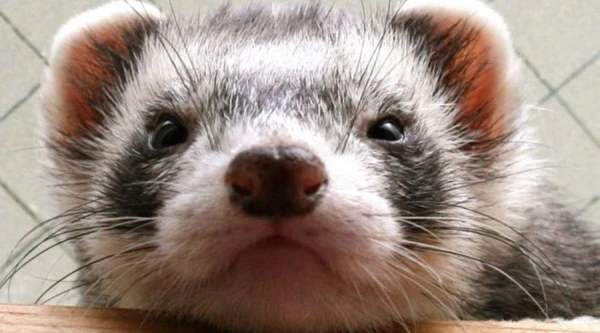
Researchers have successfully cloned two endangered American ferret kits, naming the animals Norin and Antonia.
The first cloning of an American ferret was accomplished in 2020, when a female named Elizabeth Ann was born. This procedure was carried out as part of a project to protect endangered species, initiated by the U.S. Fish and Wildlife Service in partnership with the conservation organization Revive & Restore. Frozen cells from an individual named Willow, who had died earlier, were used to create the clone. Unfortunately, Elizabeth Ann was unable to become a mother.
According to IFLScience, two more clones of this species have recently emerged – Antonia and Norin.
All three clones (Antonia, Norin, and Elizabeth Ann) were derived from a single frozen tissue sample taken from Willow in 1988. Researchers hope that Willow's genetic material will increase the gene diversity among currently living ferrets, as it contains three times more unique genetic variations than the average modern figure for this species.
A serious population decline, confined to a specific region, leads to a reduction in the genetic diversity of the entire group to the genes of the remaining individuals. This can cause an irreversible loss of genetic diversity, making the animals more vulnerable to environmental changes and diseases.
Additionally, the risk of health problems related to inbreeding increases.
According to the National Park Service, American ferrets have been listed as endangered due to increased human activity, the spread of diseases, and the destruction of prairie dogs, which make up 90% of their diet.
It is reported that Antonia was born at the Smithsonian Conservation Biology Institute in Virginia, while Norin was born at the National American Ferret Conservation Center in Colorado, where Elizabeth Ann also resides.
Scientists plan to begin breeding them later this year.





Leave a comment