All of them are genetically very close, even though they lived with people from different cultures.
The oldest dog – or rather, dogs – were found during excavations in central Turkey at a settlement of hunter-gatherers: three puppies were buried directly above human remains. However, their bones were so small that it was difficult to determine whether they belonged to dogs or wolves. The challenge was that the age of the find was about 15,800 years. There is a widespread hypothesis that domestication (the transformation of a wolf into a dog) began about 15,000 to 16,000 years ago. Based on this dating, the puppies from Turkey were very likely to have been wolf pups.
However, genetic studies have shown that what was found in Turkey were indeed dogs. DNA can be extracted and read from millennia-old remains, and a recent article in Nature describes the results of DNA analysis of Turkish dogs, as well as remains found in southern England and northern Switzerland (dating back approximately 14,300 and 14,200 years, respectively). This is not the first verification of supposed ancient dogs using paleogenetic methods. Often, such "dogs" do not withstand this verification, and for a long time, the oldest dog remains were a find from northeastern Russia dating back about 11,000 years. But now all three finds – from Turkey, England, and Switzerland – have turned out to be true dogs. Moreover, all of them are genetically very close, even though they lived with people from different cultures. The difference in DNA between the dog owners from England and Turkey was greater than between the animals themselves.
Additional DNA analysis showed a relationship between the English and Swiss finds and other ancient remains dating back about 14,000 years from Germany and Italy. It is possible that all of them descended from a common ancestor – a kind of "proto-dog" that was no longer a wolf but was quite domestic, although it had not yet begun to show the traits of specialized breeds. These animals and their owners lived at a time when Near Eastern farmer-migrants, who also had their own dogs, had not yet reached Europe. The incoming people almost completely displaced the previous inhabitants of Europe – in the DNA of modern humans, the share of early Europeans is quite small. However, dogs mixed differently: in another article, also published in Nature, it is stated that the animals living here after the arrival of farmers had only half of their DNA from European ancestors replaced with genes from Near Eastern dogs. It can be assumed that the local dogs were liked by the newcomers, and they did not displace them with their own.
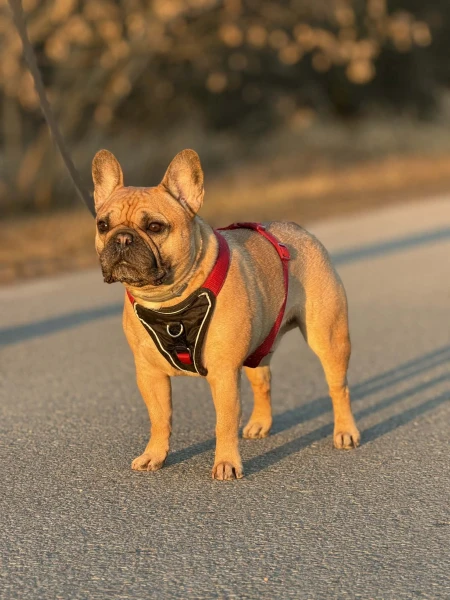
Speaking of dog genetics, it can be added that almost all modern dogs still carry a piece of wolf within them – we wrote about this at the end of last year. For a dog to be a dog, the wolf content in it must be as low as possible. Nevertheless, the wolf trace in the genomes of modern breeds is quite noticeable, and it is noticeable not only in hunting breeds but also in those like the French Bulldog or Chihuahua.