
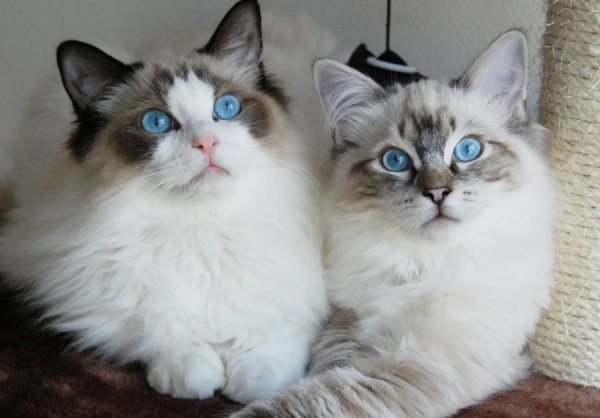
Originally, ship cats were indeed primarily used for protection against rodents, but sailors soon realized that these furry creatures had other useful qualities.
When it comes to catching mice, it is worth noting that sailors from many countries believed that polydactyl cats are better suited for this task — such animals have more toes than usual on one or more paws due to a common genetic anomaly. In some places, polydactyl cats are even referred to as “ship cats.”
Weather
As far back as the previous century, sailors believed that a cat's behavior could predict the weather. This belief has existed for over a thousand years: early navigators noticed that an excitedly raised tail could signal an approaching storm. Although I cannot confirm this information with certainty, the superstition took root, and sailors began to pay closer attention to their fluffy “barometers,” checking if it was possible to predict other weather phenomena based on their behavior.
There is some logic to this — *felis catus* do indeed sense changes in atmospheric pressure and humidity, and the wind brings them scents that allow them to more accurately determine the approach of weather anomalies: for example, an intensifying smell of water and seaweed may indicate an impending storm.
However, the belief that a cat itself attracts bad weather through witchcraft is a myth, which nonetheless many generations of sailors believed in. If a cat washes itself on bags of grain — expect hail. If it sneezes — it will rain. If it runs around like crazy — the wind will pick up. Agree, this is complete nonsense.
Outcome of the Voyage
Recently, we mentioned Jenny, the ship's cat of the Titanic. Some eyewitnesses claimed that before the tragic voyage, she moved her kittens to the pier and left the ship.
Sailors have long believed that if a cat sneaks aboard before a voyage, it is a good sign (I do not know if this applied to black cats). However, if it leaves the ship — it portends trouble.
Even worse, if two cats fought on the dock before departure: this meant that an angel and a devil had already begun to fight for the sailors' souls.
Often these superstitions were transferred from the ship to personal happiness. It was believed that if a cat approached you, it was good luck. But if it walked away and then changed its mind — the opposite.
Seasickness
There is also an opinion that for novice sailors, who are not yet accustomed to the rocking, the presence of a cat helped them cope with seasickness more easily: by petting the fluffy ball, one could relieve nausea and dizziness.
Protection from Misfortune
It was believed that if someone cruelly threw a cat overboard, the ship would face nine years of misfortunes. This is a strong guarantee against inhumane treatment — perhaps cats whisper this superstition to sailors while they sleep?
Cultural Recreation
Although cats are practically untrainable, sailors on many ships managed to find a way to bond with their pets during long hours between watches and teach them to perform various tricks: salute, “serve,” walk on a tightrope, and ring a bell, for example.
This is confirmed by a tradition in the American Navy: when entering a foreign port, local residents were invited aboard — to inspect the ship and enjoy a performance featuring the fluffy artist.










Leave a comment