
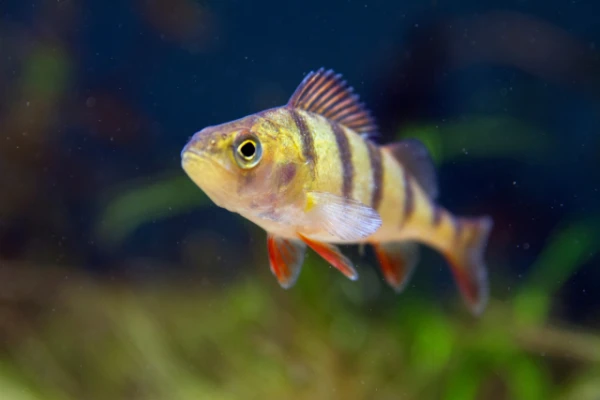
In many remote ponds and lakes, which are not connected to any other water bodies, freshwater fish can often be found; however, scientists had not known until now how they end up there.
A group of zoologists from the University of Toulouse in France decided to test the most popular theory about this, and they found that the colonization of water bodies by perch is facilitated by ducks and other aquatic birds.
It is believed that fish eggs can survive in the digestive tracts of birds, and they hatch in new water bodies. However, the viability of this theory had not been confirmed, although scientists did establish that the eggs can survive in the stomachs and intestines of birds.
The French specialists in their study primarily dismissed the version that fish are transported by humans, as surveys revealed that only one fisherman reported releasing perch into another water body, and moreover, the genetic diversity in this case would be higher, while in reality, there are no differences between perch from closed and open lakes.
The researchers considered the dispersal of fish by birds to be the most viable version, noting that this occurs from late January to early February. The scientists concluded that perch eggs can easily stick to the feet or feathers of birds, and they can also be transported with the droppings of the birds.













Leave a comment