
In Arab and Persian tales, the bird Roc feeds its chicks with elephants and does not feel the weight of Sinbad, who tied himself to its claw to cross the sea. Could any real creature do such a thing?
The largest bird that ever existed on Earth is considered to be the elephant bird, which inhabited Madagascar several centuries BC. However, this bird was flightless, and its weight reached just over 700 kg (for comparison, the elephants that Roc hunted weigh between 3 and 7 tons). As for flying birds, their maximum weight is significantly lower—around 70 kg. This is approximately the weight that Argentavis, a fossil ancestor of modern condors, had, which are considered some of the largest birds on the planet.
Physical Limitations
So why are there no birds of such size on the planet today? The main limitation is the necessity of flight. From a physics perspective, there are two main types of flight: active flapping (like sparrows or pigeons) and “passive” gliding, which utilizes the energy of rising air currents (like hawks that circle in the sky).
Argentavis was a glider, which allowed it to reach such sizes because, during gliding, most of the energy required for flight is provided by external forces—air currents. The largest modern gliders are the Andean condor and the wandering albatross, whose weights can reach 15–16 kg.
If a bird uses active flapping flight, strict weight limits arise—not more than 12 kg. Encyclopedias may state that the largest flying bird is the bustard, with large males weighing up to 20 kg.
However, there is a nuance here. Adult male bustards can indeed reach weights of up to 20 kg, but they completely lose the ability to take off. Even without delving into extremes, calling this bird a flying one is a stretch, as even young and “light” bustards fly very reluctantly and only over short distances. Thus, the largest fully flying bird is the swan, and importantly, wild swans do not exceed 12 kg.
Threshold Power
Where does this limitation come from? It can be calculated. Any living organism converts the energy of chemical bonds from food into mechanical energy for muscle contractions or into thermal energy to maintain body temperature. When “burning” food, oxygen is consumed, which the organism inhales. The parameter that shows how many units of energy (joules or calories, depending on the measurement system) the body can convert per unit of time is called power. Physiologists refer to it as “metabolic intensity.”
Giant flightless birds, such as the elephant birds, to which the elephant bird belongs, went extinct around the 10th century AD.
The caloric content of food (that is, the amount of energy that can be extracted from it) is a well-known fact. Knowing how much food an animal consumes and analyzing its oxygen consumption (for this, special masks are used), one can calculate its “power.”
Of course, the power of a swan and a quail, expressed in watts, will differ significantly. Therefore, physiologists use a relative unit of measurement called “basal metabolic rate” or BMR (from English basal metabolic rate).
When you unplug an electric kettle from the outlet, its power drops to zero, but a bird never “turns off” until its death. Even when it sits on a branch and rests, its heart beats, respiratory muscles pump air through the trachea and bronchi—and all this requires energy.
Of course, the amount of energy required to maintain the “idle” state of a swan and a quail differs. But if we express the units of energy required for various types of bird activity, not in watts but in BMR numbers, they will coincide.
For example, standing will cost both the swan and the quail 1.3 of their BMR, while calm walking will cost 1.6 BMR. Flight is a very “expensive” activity, and for most birds, it costs a full 12 BMR (instead of flying for 1 minute, a bird could rest calmly for 12 minutes). Naturally, the larger the bird's mass, the higher its flight costs.
There is also a threshold power required to simply lift off the ground under the influence of Earth's gravity and atmospheric density—and it also increases with body mass. The threshold power depends on many factors, including wing area.
Thus, a person, no matter how quickly he flaps his arms, cannot take off—the area of his arms is too small, and his body simply cannot generate the power needed to lift him into the air.
A bird's body is capable of this, but only up to certain limits. As mass increases, the power required to lift that mass into the air grows faster than the power the bird can generate in flight. If you were to plot a graph of these powers against body mass, at some point the power required for flight will exceed the actual flight power of the bird. Calculations show that these lines intersect at a mass of 12 kg.
The Secret of Sparrow Power
However, not all birds are so low-powered. There is one group that has found a rather elegant way to bypass the mass limitation for flapping flight—these are the sparrows. They seem to have decided: what if we slightly raise our own body temperature, and along with it, our BMR? The metabolic rate of sparrow birds is 1.65 times higher than that of others!
Thus, a thrush, which belongs to the sparrow family, is more powerful than a quail by more than one and a half times. This means that its flight, requiring the same 12 BMR as other birds, in absolute terms will be more than one and a half times “more powerful” and can lift a larger mass into the air. But why then are there no giant sparrows?
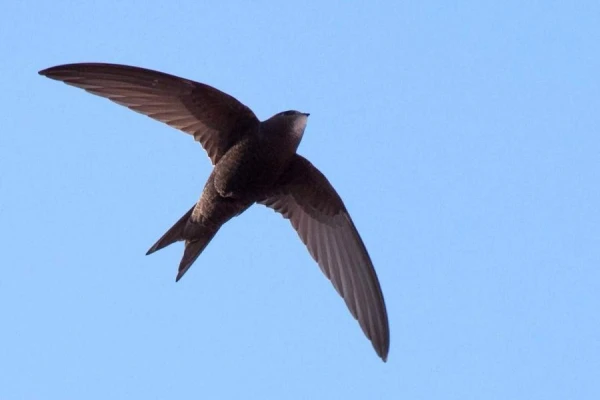
The fact is that birds are not only flying creatures but also running, incubating eggs, etc. The better a bird flies, the worse it performs other tasks. Remember swifts—they fly perfectly, but if they fall from a branch to the ground, they cannot take off: their legs are too weak, and their wings are too long. Compare them to swallows, which are very similar to swifts but are actually relatives of sparrows. Strictly speaking, swallows should fly worse than swifts. However, thanks to the sparrow's “excess” power, they bridge that gap and outperform swifts in everything else—for example, swallows can take off from the ground.
In a sense, sparrow birds embody an old engineering joke: “Aerodynamics was invented by those who cannot build powerful engines; with a powerful engine, even a fence will fly.” They expend their excess power on adapting to other ecological niches rather than increasing in size—it is no coincidence that sparrow birds outnumber all other bird species combined.
As for gliding flight, even the largest gliding birds do not reach a hundred kilograms. There are two reasons for this.
First, the limitation of available habitats. Flight is not the most “expensive” activity for birds on the BMR scale. For example, while flight requires 12 BMR, taking off from the ground requires 16. Observing pigeons in the yard, one can notice that for this reason they are much more willing to start by jumping off roofs or wires rather than from the ground.
And the condor, the largest of the currently living gliding birds, requires 40 BMR to take off, despite its huge wide wings. Due to its large body mass, gliding birds find it very difficult to take off from the ground, so they are forced to start by jumping from heights. This is why condors inhabit the Andes, where there are many suitable ledges.
Secondly, bird wings are made of feathers, which gradually wear out, so they need to be replaced regularly. Molting requires significant energy expenditure, and during this period, birds become vulnerable to various diseases, so they try to speed up this process.
Some, like ducks, shed their flight feathers all at once and lose the ability to fly for several weeks. However, not all birds can afford such luxury, so most feathered creatures replace their flight feathers gradually. The larger the bird, the longer its flight feathers, and the longer the molting lasts, meaning the longer it remains vulnerable.
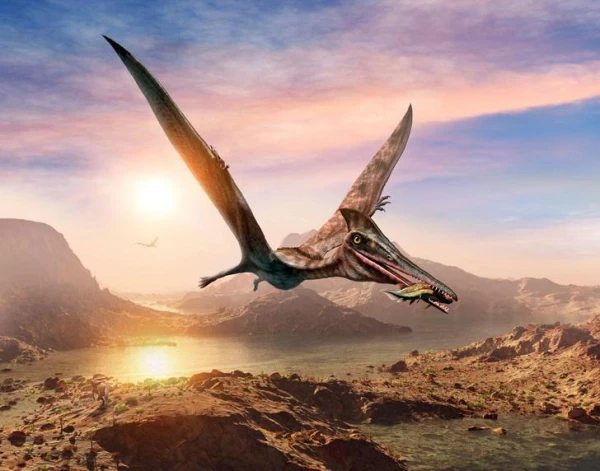
Thus, the prototype of the mythical bird Roc would have to possess gliding flight, live in high mountains for the possibility of takeoff, consume enormous amounts of food, and have leathery wings to avoid the need to molt. If we consider any real creature as a prototype for Roc, we should pay attention to pterosaurs—their wings were leathery, which spared them from feather problems, allowing them to reach much larger sizes.
Thus, we live in a world where stereotypical dragons look more realistic than giant birds. And that is the case.









Leave a comment