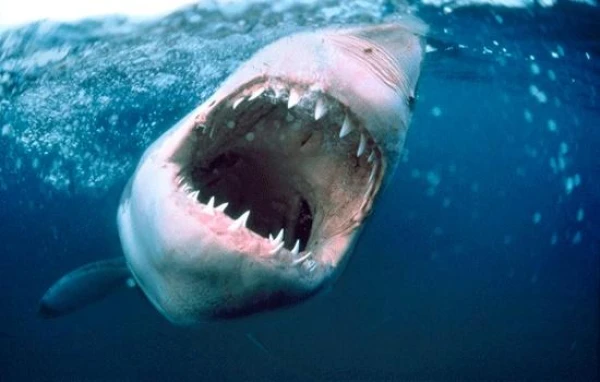
According to popular belief, sharks are not susceptible to cancer, which supposedly makes shark cartilage effective in preventing this disease in humans. However, this viewpoint has serious shortcomings.
In several countries, the dietary supplement "Shark Cartilage" is popular. This powder, derived from shark cartilage, was proposed in the 1980s as a means of cancer prevention.
The essence is that shark cartilage has anti-angiogenic properties, which means it can slow down or stop the formation of new blood vessels. Since tumors require blood networks for growth and survival, halting their formation should lead to the depletion and destruction of the tumor. This has formed the basis for the belief that sharks do not get cancer, and therefore we have something to "learn" from them.
However, there are two serious problems here. The first is that while some treatments and drugs that inhibit angiogenesis are indeed effective and have received FDA approval for fighting cancer, cartilage tablets are not among them. The manufacturers of this powder base their advertising claims on a limited number of studies that, according to a 2005 article in the journal Cancer, show only a "modest ability to slow the growth of new blood vessels in laboratory conditions and in animals," as well as on a number of trials criticized for insufficient control and methodology, leading to ambiguous results in humans.
In another study, it was reported that a group of patients with advanced cancer achieved remission through treatment with cartilage powder; however, the results were not published in a peer-reviewed journal, and the National Cancer Institute later characterized the study as "incomplete and unimpressive."
The overwhelming majority of peer-reviewed and published data contradict the alleged anti-cancer properties of shark cartilage. In numerous trials on both humans and animals, researchers concluded that shark cartilage offers no benefit. Both the FDA and the FTC have removed shark cartilage products from the market and/or fined their manufacturers for unproven claims about anti-cancer properties.
But... Do sharks get cancer?
The second problem is that the very idea that sharks do not get cancer is erroneous.
Sharks are indeed susceptible to cancer. Scientists have known this long before people began claiming that they do not have this disease. The first recorded tumor in a cartilaginous fish was found in a skate in 1853, and the first tumor in a shark was documented in 1908. Since then, researchers have identified about 40 cases of cancerous tumors in at least 24 species of sharks. These tumors have been found in various parts of the body, including cartilage and on the snout of the unfortunate great white shark.