
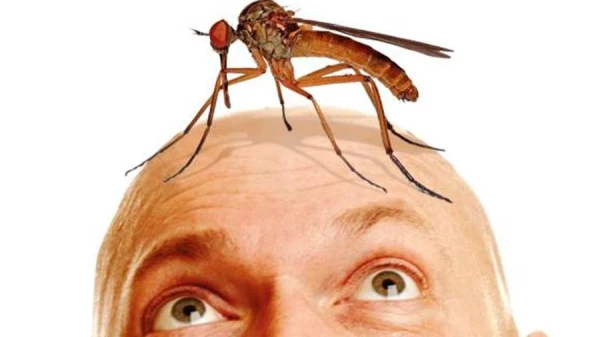
They play an important role in ecosystems.
Mosquitoes are often perceived as creatures created solely to cause us inconvenience. When it became known that they are carriers of many diseases, their reputation worsened even further, and mosquitoes began to seem like a real plague.
However, mosquitoes represent an important element of natural balance, and their disappearance could have serious consequences. These tiny insects are part of a more complex system — a biocenosis, where everything matters: the atmosphere, water regime, soil, microorganisms, and animals. The removal of one link can lead to negative consequences for the entire ecosystem.
For example, in the Arctic, where the short and cold summer serves as a nesting ground for most northern birds, mosquito larvae often become the only source of food for them. However, even those mosquitoes and larvae that manage to escape predators do not live in vain. Huge masses of insects carry important chemical elements in their bodies: carbon, nitrogen, phosphorus, calcium, iron, manganese, molybdenum, and boron, which are necessary for plants. Scientists suggest that mosquitoes may be the only biological 'transport' for some trace elements, without which both grasses and mighty trees suffer.
Moreover, by carrying infections, mosquitoes play the role of a crucial stabilizer of ecosystems, regulating the populations of various animal species, including predators.













Leave a comment