
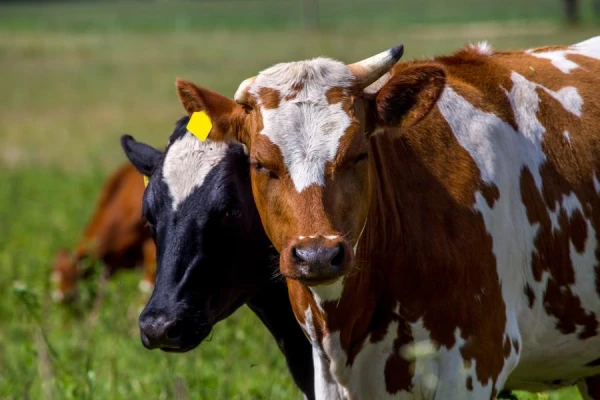
Geneticists made an important discovery with promising implications.
American animal scientists conducted an experiment in which a cow was genetically modified. As a result, a special cow capable of producing insulin-enriched milk was created. Previously, various scientists had attempted to extract insulin from cattle, but this is the first case where researchers were able to 'enhance' a cow to produce this important protein.
To achieve the goal, the research team introduced a specific segment of human DNA that encodes proinsulin (a protein that is converted into insulin) into the nuclei of cells from ten bovine embryos, which were then implanted into healthy cows. As reported by the animal scientists in their article published in the Biotechnology Journal, one of the genetically modified embryos led to a successful pregnancy, resulting in the birth of a transgenic calf — a female, into whose genome a gene that could not be obtained through natural breeding was artificially introduced.
When the calf reached maturity for lactation, the animal scientists attempted to fertilize it several times — both naturally and through in vitro methods, as well as artificially, but none of the approaches were successful. Ultimately, the scientists applied hormonal induction and were able to achieve lactation in the cow.
Although the amount of milk she produced was small, even this allowed for the detection of specific proteins absent in ordinary cows.
In particular, the researchers discovered C-peptide (a polypeptide formed during the cleavage of proinsulin), which is removed from human proinsulin during its conversion to insulin. This led to the hypothesis that enzymes in cow's milk could convert 'human' proinsulin into insulin.
Although the specific concentration of insulin in the milk has not yet been calculated, the scientists suggest that even if it is possible to extract at least one gram of protein from a liter of milk, this would already be a significant achievement. Ultimately, the animal scientists expressed hope that a single large herd of genetically modified cows could provide the entire world with an annual supply of insulin.
After cows, attention may turn to amphibians — recently, the first amphibian capable of feeding its offspring with milk was discovered in Brazil.












Leave a comment