
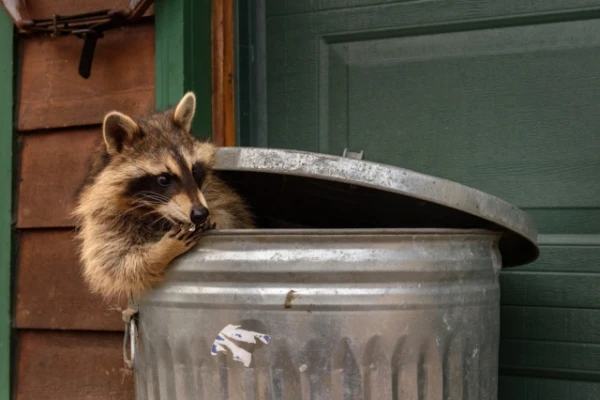
Raccoons continue to explore and solve puzzles even after they find all the food. This indicates that their behavior is driven not only by hunger but also by inherent curiosity.
An experiment conducted by zoologists from the University of British Columbia showed that animals with access to a box containing nine different types of latches and doors did not stop after extracting a marshmallow. They continued to open new elements, spending time and energy exploring without immediate reward.
The scientists refer to this behavior as information-seeking: the animal invests resources in acquiring knowledge that may be useful in the future. Moreover, the raccoons' strategy changed depending on the complexity of the task. They explored simple puzzles broadly, trying different options, while in more complex situations, they preferred to use already proven methods, minimizing the risk of failure.
This flexibility, along with sensitive front paws and the ability to innovate, helps explain why raccoons are so successful at colonizing cities, having learned to open trash cans and containers.
The study confirms long-standing folklore beliefs about the intelligence of raccoons with empirical data and shows that their craving for novelty can lead to a kind of cognitive arms race with humans, who are trying to create increasingly reliable barriers.















Leave a comment