
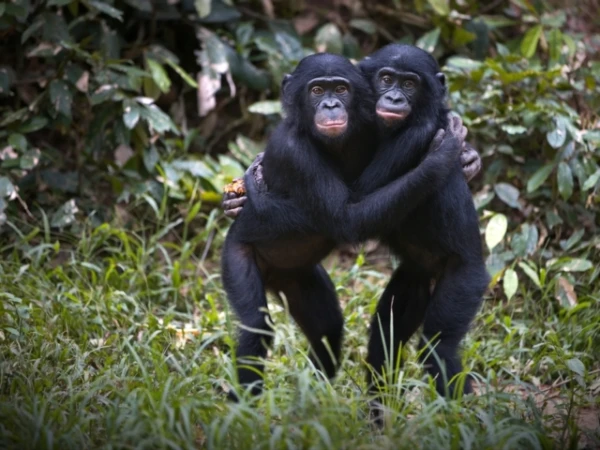
Chimpanzees and bonobos — two closest relatives of humans — turned out to be much closer in terms of aggression levels than previously thought. The new study debunks the stereotype of 'violent chimpanzees' and 'peaceful bonobos.'
Scientists from Utrecht and Antwerp universities observed 22 groups of primates in European zoos (189 individuals) and recorded over 3,000 instances of aggressive behavior. The total number of aggressive acts in both species was nearly identical.
However, the key difference was in who directed aggression and against whom. In chimpanzees, aggression primarily came from males and was directed at various group members. In bonobos, aggression was exhibited by individuals of both sexes, but the targets were more often males. This reflects the matriarchal structure of their communities, where females hold a dominant position.
The differences in behavior are likely related to habitat conditions. North of the Congo River, chimpanzees compete for unevenly distributed food resources and share the forest with gorillas. Further south, resources for bonobos are more abundant, reducing competition but not eliminating intra-group conflicts.
The study also showed that the level of aggression varies significantly from group to group even within the same species. This means that social dynamics and individual relationships influence behavior just as much as species affiliation. The findings challenge the hypothesis of bonobo 'self-domestication' and prompt a reevaluation of simplified analogies with human nature.
















Leave a comment