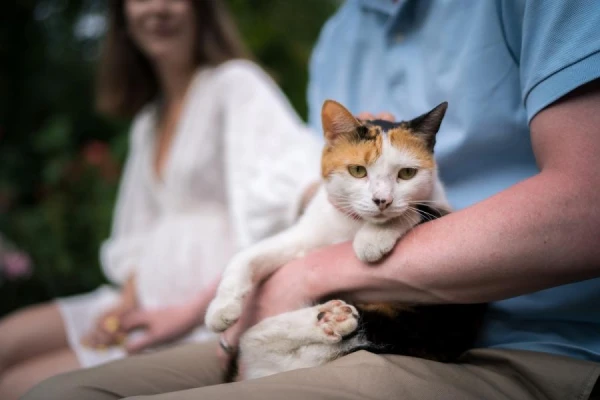
In the wild, a future mother seeks shelter and creates a den before giving birth. Stray cats retain these instincts, while domestic pets often cannot care for themselves, and all responsibilities fall on the shoulders of a responsible owner.
Creating a 'Birthing Area'
Today, pet stores and the internet offer special houses and beds for cats. However, the most convenient and economical option is a regular cardboard box. It is important to avoid using boxes from household chemicals or perfumes, as their strong smell may scare the animal.
The height of the box should be between 12 and 25 cm, so the cat can easily get inside, and the kittens cannot escape and get underfoot. For the same reason, do not cut openings for entry on the side of the box.
The length of the box should be at least 60 cm, so that the mother and her kittens can comfortably fit inside.
It is recommended to place the 'birthing area' in a quiet corner with minimal household traffic. An ideal option would be a corner surrounded by walls on two sides. This arrangement will also help prevent the kittens from scattering after birth.
Getting the Cat Used to the Box
If the cat is becoming a mother for the first time, it is best to introduce her to the box two weeks before giving birth.
Do not expect the animal to immediately love the new place. If the cat tries to jump out of the box, it is necessary to be patient and return her back without scolding. Gradually, she will understand that this is her personal space.
When the future mother starts spending time in her house, the box should be covered with a towel or cloth, leaving 10-15 cm open for access.
After giving birth, the young mother may try to move the kittens to another place she considers safer, such as under the couch. In this case, gently return the babies to the box, explaining to the cat that they should stay with her. Over time, she will appreciate the advantages of her house.
Do Not Interfere with the Birth
The duration of labor is an individual process that depends on breed, body type, weight, and other factors. An important aspect is the experience of the mother: first-time births may take longer.
The onset of labor can be determined by the cat's behavior: she begins to become restless, makes anxious sounds, and tries to hide in a closet or another secluded place. This stage lasts on average 1.5-2 hours, and during this time, it is important to monitor the pet and be ready to move her to the 'birthing area.'
From this moment on, the owner's role is to observe. It is not advisable to interfere and help the cat — nature has created this process, and even an inexperienced mother instinctively knows what to do.
Some articles on the internet advise owners to cut and tie the umbilical cord themselves, as well as to wipe the newborns with cloths. This should not be done!
The cat's maternal instinct activates, and she should remove the placenta, bite through the umbilical cord, and lick the kitten herself. Usually, she also eats the placenta, which should not cause shock: during this process, the mother receives hormones that facilitate the birth of the next kitten and the release of colostrum, and then milk. Instincts also manifest in the newborns — the kitten finds the mother's nipple by smell.
The intervals between the births of kittens can vary. The second baby may appear within 20-30 minutes, but if there are more than seven or eight kittens, the intervals may increase to an hour starting from the fifth. The eighth or ninth kitten may be born several hours later, coming as a surprise to the owner who thought the birth was over.
As the kittens are born, after they have nursed on colostrum, it is better to move them to the opposite end of the box, as the mother may accidentally crush them during contractions.
Feeding the cat immediately after giving birth is pointless, as she will be satisfied with the placenta. However, after the process is complete, she will likely head to the water bowl, so it is advisable to ensure water is available in advance.