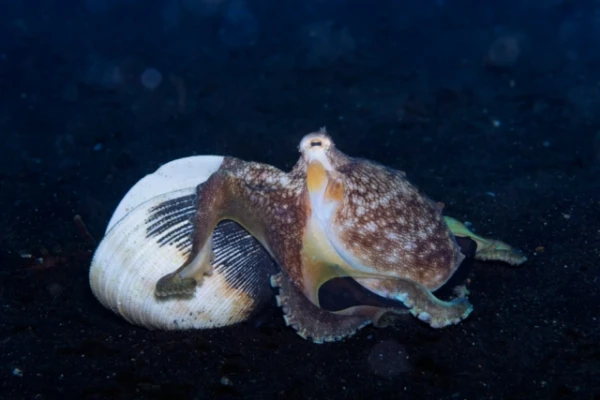
The coconut octopus Amphioctopus marginatus is considered an amazing master of disguise and tactical deception in the underwater world.
Living in the tropical waters of the Indian and Pacific Oceans, it has developed a unique hunting strategy, using surrounding objects as tools. The predator collects empty halves of bivalve shells, coconut shells, and even human-made debris — such as glass bottles or plastic containers.
The octopus uses them as portable shelters, climbing inside and covering the entrance with its tentacles to disguise itself as an innocuous object on the seabed. When unsuspecting prey — a shrimp or crab — comes too close, the predator strikes swiftly from ambush and then hides back in its shelter.
Researchers have documented that these octopuses deliberately carry their "homes" over significant distances for future use. This behavior is considered a complex example of tool use — a rare phenomenon among invertebrates.
The picture is further complemented by an unusual mode of movement: sometimes coconut octopuses "walk" along the seabed on two hind tentacles, maintaining balance while not letting go of their valuable cargo with the others. Their ability to change color and pattern using chromatophores for camouflage and communication makes these animals some of the most intelligent and behaviorally complex inhabitants of the ocean.