
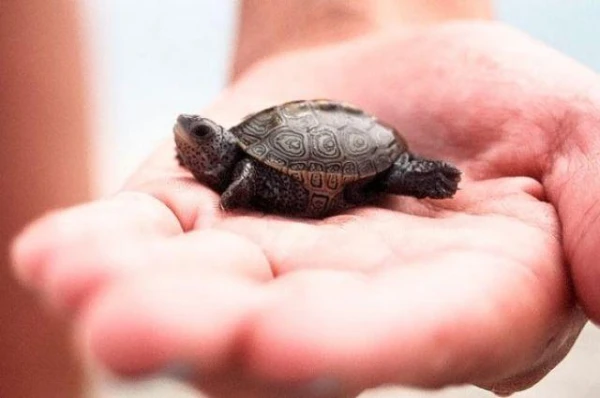
Researchers from the University of Reading (UK) in collaboration with Austrian colleagues have discovered why some animal species are decreasing in size, contrary to Cope's law. They termed this phenomenon the inverted Cope's rule. The study results, published in the journal Communications Biology, show that size changes depend not only on competition between species but also on the risk of extinction.
Exceptions to the Evolutionary Rule
The Cope's law states that in the process of evolution, the sizes of animals increase over millions of years. This rule is named after the 19th-century paleontologist Edward Cope, who first noticed this pattern. A vivid example is the evolution of horses, which were originally the size of dogs.
It was believed that the larger the size of an individual, the higher its adaptability, and thus the chances for reproduction and survival. However, throughout Earth's history, there have been cases where species with large sizes went extinct, as happened with dinosaurs and giant flying reptiles. New fossil discoveries also show that some groups of animals decreased in size over time. These paradoxes have led scientists to debate the applicability of Cope's law for several decades.
In a new study, the authors applied computer modeling simulating evolutionary processes to resolve this long-standing dispute. They concluded that there are three types of evolutionary adaptation, and only two of them correspond to Cope's law, while the third case represents an 'inverted' rule.
Thus, Cope's law is applicable in two cases.
The first case: when competition between species depends solely on their sizes, and the risk of extinction is low. Under such conditions, sizes increase over millions of years, as observed in some genera of marine animals, such as invertebrates.
The second case: when the risk of extinction is high. Apex predators—the largest animals—periodically disappear during evolution, allowing other species to take their place and develop even larger sizes. However, this cycle of extinction repeats. A vivid example is dinosaurs.
Everyone Has Their Place in the Ecosystem
The third pattern is discussed when competition between species depends not only on their sizes but also on ecological niches. When habitats and necessary resources begin to overlap, species are forced to occupy separate niches and decrease in size to minimize competition.
'When there is intense competition for food and shelter among different species, the sizes of animals often decrease as the species spreads and adapts to resource distribution and competitors,' notes Shovonlal Roy, an ecosystem modeling specialist.
'For example, small horses that lived in Alaska during the Ice Age quickly decreased in size due to changes in climate and vegetation,' adds the scientist.
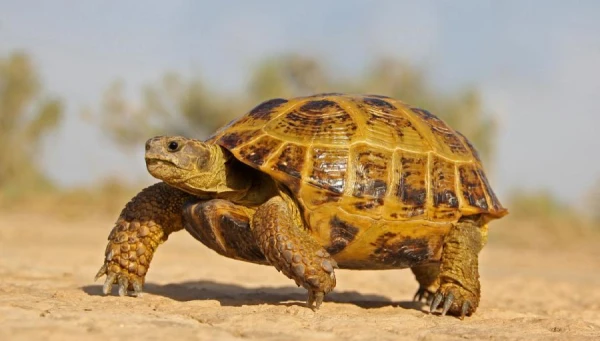
The trend towards reduction has also affected some species of freshwater bony fish, island lizards, hidden-neck turtles (regarding most modern families), and even some vertebrates, insects, and modern mammals.
According to the researchers, ecological factors and their changes now allow for an explanation of why such contradictory data are observed in the fossil record.







Leave a comment