
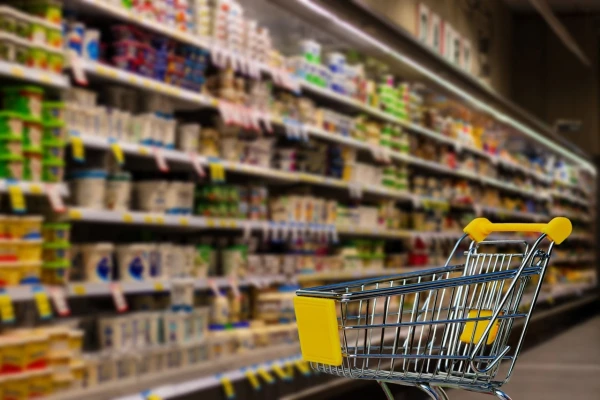
Price comparisons for food, various promotions and initiatives, conflicts between retail chains—the issue of prices never loses its relevance in our daily lives, writes Diena.
Recently, several events have drawn attention to prices in grocery stores, raising the question of whether this news reflects objective reality. For example, on January 16, the company "SeeNext" published a study that acknowledged the significant price differences for the same basket of goods in the largest retail chains in Latvia.
In January, the price difference between the cheapest and the most expensive chain of stores was €15.31, but even between the cheapest chain ("Lidl") and the second cheapest chain ("Rimi"), it amounted to a whole six euros.
As Inga Gulbe, head of the agricultural market assistance department at the Institute of Agrarian Resources and Economics, told "Diena," due to differences in assortment, prices at "Lidl" cannot be compared with other retail chains, but it would be worth finding out who commissioned this study.
Food prices regularly change both upwards and downwards, but usually, people notice price increases, she added. For example, a decrease in prices for rice and bananas may go unnoticed by shoppers, while an increase in coffee prices is felt by everyone who consumes it. Gulbe reminds us that price fluctuations occur worldwide, including in Vilnius and Tallinn, where she regularly compares prices in five retail chains in each city (in Riga, there are four such chains). The expert also notes that she observes a greater increase in prices for relatively expensive goods, as each percentage in monetary terms results in a larger increase.
There are trends that are initially difficult to explain, such as why vegetables are cheaper in Estonia than in Latvia. There was even a version that vegetables are sold there below the purchase price. On the other hand, there is a certain type of cheese that is significantly cheaper in Latvia than in the two other neighboring countries. A very large price difference is often found between the cheapest and the next most expensive product, and especially in Estonia, Gulbe noticed that the shelves with the cheapest products are empty.
At the end of May last year, Gulbe was skeptical about the possibility of influencing prices through a memorandum that the Ministry of Economics was counting on. She still repeats the same in an interview with "Diena," stating that the task of the Ministry of Economics is to promote entrepreneurship development so that entrepreneurs pay their employees more and increase purchasing power, which is still low for many people. However, during the negotiations on the memorandum, producers and traders sat down at the negotiating table, and several agreements were reached, which Gulbe says should be viewed positively.









Leave a comment