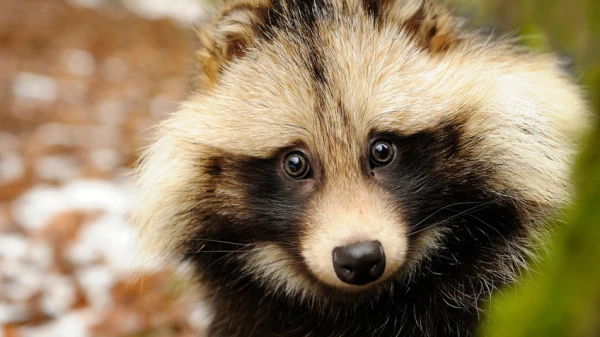
Last year, the most commonly encountered invasive species in Latvia were raccoon dogs and Spanish slugs, reported the head of the communications department of the "LatViaNature" project of the Nature Conservation Agency (DAP), Anda Zakenfelde.
In 2025, a record number of reports on invasive species observed in nature were received and summarized on the DAP website "invazivs.lv" — 9,774 reports from all regions. This is more than five times the statistics of 2024, when 1,744 reports were received.
Most of the reports received concerned invasive animal species — 5,377 or 55%, including the most frequently reported raccoons — 3,335 cases, Spanish slugs — 1,376 cases, and American signal crayfish — 202 cases.
At the same time, there were 4,397 reports of alien plant species last year, or 45% of the total number of reports. The highest number of reports was about the Giant hogweed — 1,686 cases, Canadian goldenrod — 1,143 cases, and flowering spiraea — 309 cases.
Santa Rutkovska, head of the invasive species department of the DAP "LatViaNature" project, believes that the increase in reports indicates a growing awareness of the public about invasive species, the damage they cause, and the threat they pose to local species and biodiversity in Latvia. Unfortunately, invasive species are spreading and becoming increasingly noticeable over more extensive areas in all regions of Latvia. This is most clearly seen in the case of the Spanish slug, with reports of it increasing more than six times compared to 2024, notes Rutkovska.
The database of invasive species includes observations of invasive species made by nature experts while developing conservation plans or preparing reports, as well as data collected during various conservation projects. Most reports also come from residents who document observed invasive species in nature on the "invazivs.lv" website or using the invasive species mobile application.
Each report received is verified by scientists and nature experts from DAP, Daugavpils University, and the Latvian Institute of Hydroecology. The reports are then recorded on maps of the distribution of invasive species to timely detect and account for the spread of invasive species, as well as to plan measures to limit them.