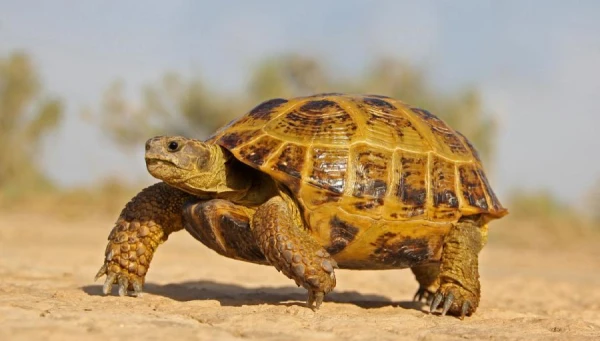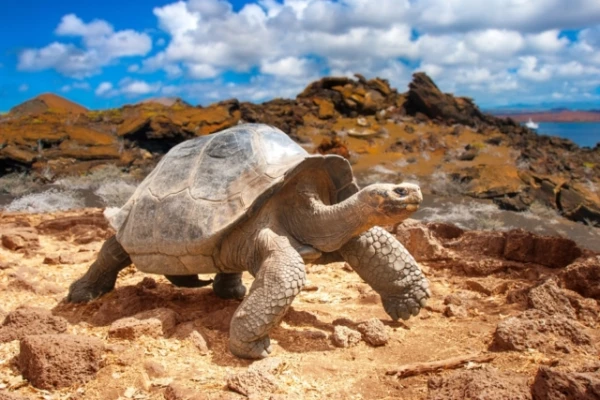
The ability to completely hide the head in the shell is not present in all turtles. This skill depends on body structure and habitat.
Terrestrial turtles and many freshwater species do this in two ways: some fold their long necks horizontally, while others retract their heads vertically, forming an S-shaped curve. However, sea turtles physically cannot hide their heads — their streamlined, lightweight shells leave no room for that, but they allow for fast swimming.
The evolution of the shell lasted about 300 million years, and initially, it did not serve for protection. Fossil findings show that the expanded ribs helped ancient turtle ancestors, such as Eunotosaurus, to dig burrows better. Later, aquatic species like Odontochelys developed a strong lower shell — the plastron, which likely served as ballast for diving or protection from predators below. The protective function became primary only with the appearance of a fully formed shell.
A sturdy shell is one of the key advantages that allowed turtles to survive several mass extinctions on Earth. The modern ability to hide their heads is a useful byproduct of an ancient evolutionary adaptation that originally had quite different purposes.