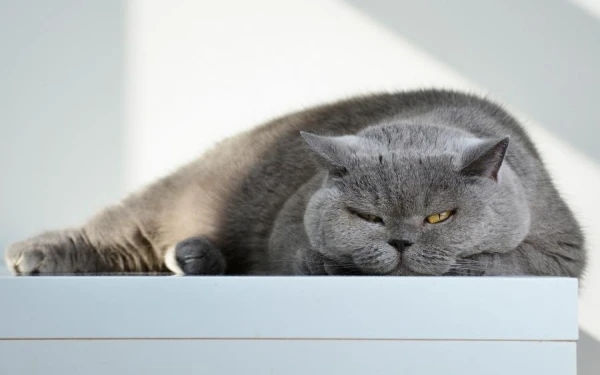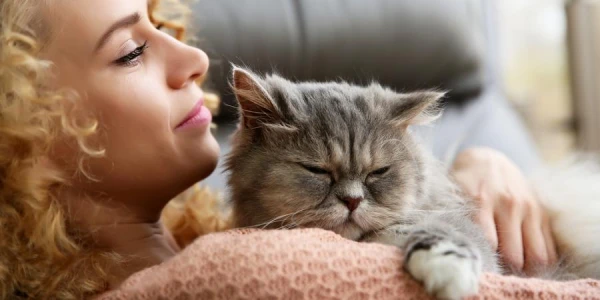
Animals, especially cats, love affection. A fluffy companion rarely refuses strokes on its fur and may sometimes seek attention at the most unexpected moment. What drives these creatures, and why do they find it so pleasant when they are petted?
Almost all animals respond positively to gentle touches. Scientists associate this with the fact that gentle strokes on their fur evoke memories of childhood when their mother licked them. Gentle touches are associated with protection and care.
But how exactly is this process triggered? A study conducted in 2003 showed that petting activates a specific set of neurons in the brain. During the research, scientists found that sensory neurons in mice respond to any contact in a roughly similar way. For example, a pinch or a kick elicits a reaction in most sensory neurons, but gentle petting turned out to be the only sensation that stimulates a type of neuron known as MRGPRB4+.
Stimulation of MRGPRB4+ triggers the synthesis of a chemical that reduces stress levels in animals. Further research on MRGPRB4+ revealed that these neurons are connected to hair follicles on the skin of mice. This is why gentle stroking of their fur is so pleasant for animals—it calms them down.
Undoubtedly, many pets enjoy being scratched. In this case, the reason lies in simple physiology—there is indeed a part of the animal's body that it itches, which is difficult for it to reach on its own.