
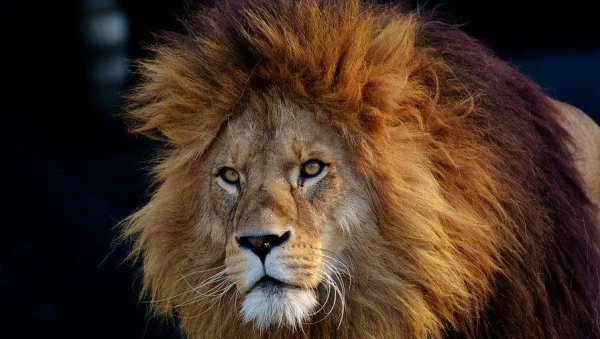
Prides of male lions consist of relatives, but not only.
Lions are renowned for their social structure, yet their social life continues to raise many questions. It is known that lions form prides consisting of several adult females with cubs and one male who hunts, protects his territory, and cares for the offspring. It is important to note that there can be several males in a pride—two, three, or even four. The friendship among females is understandable as they are related, while the friendly relationships among males raise more questions. Moreover, males sometimes form pairs, and among Asiatic lions, mini-groups of three to four males have been observed. Males compete for females, leading to the question: what drives them to befriend their competitors?
Researchers from the University of Minnesota, along with colleagues from India, have long observed male groups of Asiatic lions in the Gir Sanctuary. They not only monitored the behavior of the lions but also correlated it with their genetic profiles. It would be logical to assume that male lions, like females, prefer to associate with relatives. This is indeed the case, but only in groups where three to four males are present—they usually are brothers or cousins. However, among pairs of males, in 70% of cases, the lions had no familial ties.
Two lions find it easier to hunt and defend their territory than one, and a group of three to four males finds it even easier. On the other hand, there is always a hierarchy in lion groups, and the dominant male receives more food than his companions. During the mating season, when prides of males and females meet, the dominant male has a better chance of leaving offspring. Other group members may accept this situation if they are all relatives: although someone may not receive an extra piece of meat or a chance to reproduce, their genes will still be passed on through their relative.
If the males are not related, it is more beneficial for them to pair up: although they are competitors, hunting and protecting females is easier together than alone. (At the same time, among pairs of males, there are also familial ties— for example, a father may befriend his son.)
Thus, when male lions form partnerships, they evaluate how much easier it will be for them to survive compared to the level of competition for reproductive opportunities. At the same time, the authors of the study note that when repelling attacks from outsiders, related lions help each other no more and no less than lions without familial ties. Kinship can significantly strengthen social interaction among males, but it is clear that the social structure among males depends on many factors that still need to be studied.
The results of the study are published in Scientific Reports.










Leave a comment