
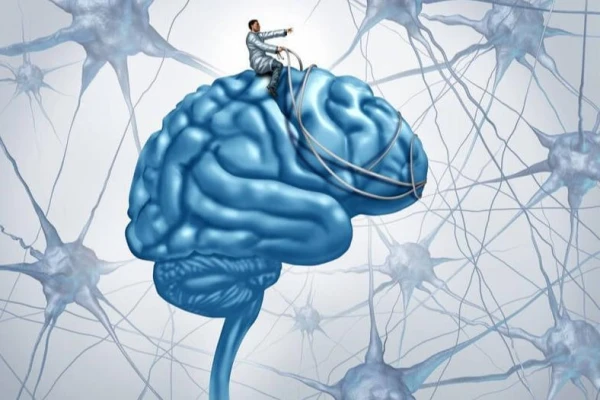
The newborn's brain seems underdeveloped only in comparison to the brains of adult individuals.
There is an opinion that humans are born with underdeveloped brains. Indeed, when comparing a child's brain to that of an adult, the difference is significantly more noticeable than when comparing a baby chimpanzee's brain to that of an adult chimpanzee. Furthermore, infants are less capable of controlling their movements and appear more helpless compared to the young of great apes. This suggests that certain stages of brain development that occur in apes in utero are shifted to the postnatal period in humans. Interestingly, this may also explain the high plasticity of the human brain in the first years of life: it actively responds to various external stimuli and readily adapts to their influence.
However, as reported in the journal Nature Ecology & Evolution by researchers from University College London and their colleagues from scientific institutions in the USA, the notion of underdeveloped brains in newborns is not entirely accurate. The development of the nervous system, particularly the brain, goes through many stages, totaling over two hundred: this includes the formation of major brain regions and the development of clusters of neurons-nuclei with specific functions, up to the completion of myelination (that is, the covering with a special lipid sheath) of neural fibers in certain areas of the cerebellum. Embryonic events can be correlated with brain growth and how its size after birth relates to the size of the newborn's body and the size of the adult body; finally, brain parameters can be compared with gestation periods. All of this can be analyzed across different species of animals.
As a result of this analysis among one hundred and forty species of mammals, the researchers concluded that the human brain at birth is in almost the same state as that of great apes. That is, nearly all "maturation events" in the human brain occur before birth, just as they do in closely related primates. The only thing that is completed after birth is the myelination of certain neural pathways, but this is not a delay that would allow one to consider the brain to be significantly underdeveloped.
The human brain indeed possesses high plasticity and sensitivity to surrounding signals — this is undisputed. However, this characteristic is not explained by the fact that it is born too early. The newborn's brain appears underdeveloped only in comparison to the brain of an adult, that is, to the level it is expected to reach during life. But it starts from the same position as the brains of newborn apes.
















Leave a comment