
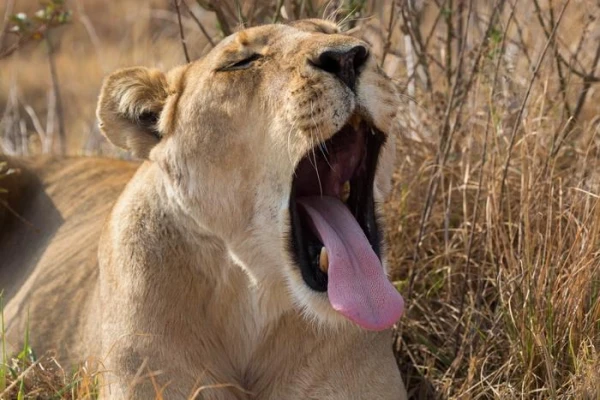
Kenyan lions are under attack. But this time the threat comes not from their kin or poachers, but from haters on social media.
There are more and more posts mocking the laziness of these big cats. Some tourists express disappointment upon discovering calm creatures instead of the fierce hunters they are used to seeing on television.
The most popular among such publications is a video posted on TikTok by a traveler with the username Giorebil.
"Go to Kenya, you will see lions," he wrote, hinting that lions in the country are given undeserved fame.
The footage shows lions resting in various poses in reserves. They appear almost tame and nothing like the fearsome predators depicted in documentaries.
According to the dissatisfied tourist, the lions only "sleep, eat, and sleep again." "Better to get a cat," he exclaimed.
In just a couple of days, this video garnered over 18,000 comments, with Kenyans defending the lions: "What did you expect?"
Among the commentators was musician Bien-Aimé Baraza, who asked, "Did you want Simba and Nala to dance for you?"
Watching lions is the main reason tourists flock to Kenya's national parks and reserves, attracting about 3.74 million visitors annually. The lion population is growing: a few years ago, there were 2,589 individuals, and in private conservation areas like Ol Pejeta, lion tracking is even offered — similar to a private safari.
However, not all tourists manage to see lions develop high speed to catch prey.
It is quite typical for lions to "sleep, eat, and sleep again," explains Isaac Lekolul from the Kenya Wildlife Service (KWS). According to him, during the day, you are more likely to find lions lounging rather than hunting.
"They are nocturnal," the expert reminds, implying that they are more active at night.
Tourists hoping to catch lions in action would do better to choose a different time.
"Early morning is the best time. Early in the morning or late in the evening. In the late evening, we catch them still a bit sluggish, but early in the morning they are still quite active. Because usually, they are very active at night," Lekolul clarifies, heading the veterinary service at KWS.
He dismissed accusations against the lions, which the online community is quick to make: "This is not laziness. For lions, sleeping for hours is not an abnormality. They rest for almost two-thirds of the time."
Nairobi National Park is one of the best places to observe lions, as visitors do not have to travel far to find them; in larger areas like Tsavo and Amboseli, it may require a long journey, the specialist added.
"You can find them just resting on the road. They are not that skittish," Lekolul concluded.
According to KWS, lions can rest or sleep for 16–20 hours a day: "This is one of the highest resting rates among mammals."
One reason for this lifestyle is energy conservation.
"Hunting requires a lot of energy expenditure. Lions rely on short, powerful bursts of speed rather than endurance. Resting helps them conserve energy for hunting. What seems like 'laziness' is actually a strategy for adaptation. Lions balance energy use and survival efficiency. They can afford to rest so much because, unlike prey animals, they do not need to be constantly alert and searching for food," KWS reported.













Leave a comment