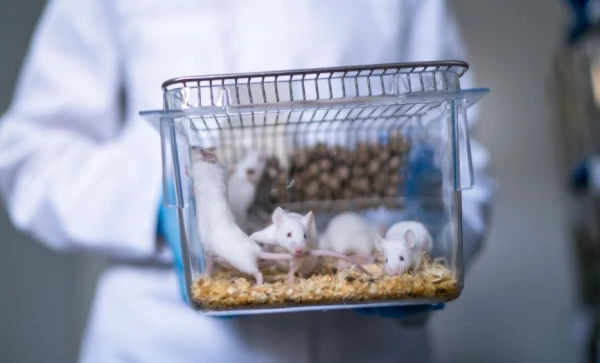
A group of scientists from the Champalimaud Foundation in Portugal discovered that the slightest facial movements of mice can reveal their cognitive strategies in decision-making. The study is published in the journal Nature Neuroscience.
Research Methodology
In the experiment, mice faced a choice between two drinking stations: one contained plain water, while the other had sweetened water. The task was to determine which drinking station to choose, considering that the sweetened water could be moved.
The researchers used video analytics and machine learning methods to analyze the slightest movements of the animals' facial muscles. This allowed them to identify that even minor changes in facial expressions could indicate internal cognitive processes, such as deliberation or decision-making.
Results and Conclusions
The analysis showed that the facial expressions of mice reflect not only current cognitive processes but also hidden, yet-to-emerge behavioral strategies. These data were correlated with neuronal activity in the animals' brains, confirming a high degree of correlation between facial movements and neuronal activity.
"We were surprised to find that we could obtain so much information about what a mouse 'thinks' as if we were recording the activity of dozens of neurons," noted one of the study's authors, Zachary Mainen, scientific director of the Champalimaud Foundation.
Practical Significance
This discovery opens new possibilities for non-invasive studies of cognitive processes and neuronal activity. Analyzing facial expressions could become an effective tool in neurobiology, psychology, and psychiatry, allowing researchers to explore the internal states of animals without the need for complex and invasive methods.
However, the authors of the study also emphasize the importance of protecting mental privacy in an era of widespread surveillance.
"Easy access to the hidden contents of the mind could significantly accelerate brain research, but it also requires the development of measures to protect mental privacy," Mainen emphasized.