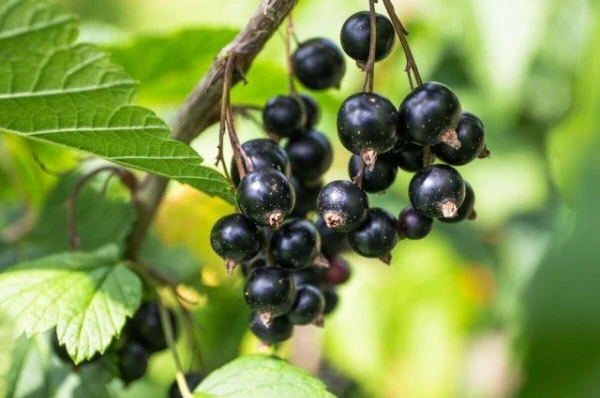
If blackcurrants are left without feeding in April, large berries cannot be expected.
It is not enough to simply "throw a couple of shovels of manure under the bush," as is customary in Latvian gardens, as this only causes root burns (if the manure is fresh), but rather precise nutrition according to timing and norms. Agronomist Denis Terentyev shared a simple and effective scheme for feeding blackcurrants in the spring.
The Most Convenient Option
Before any mineral feeding, it is better to water the blackcurrants well 2–3 hours in advance to avoid burning the roots and to prevent the fertilizer from washing away.
If the spring is cold and the soil is still not very warm, the most convenient option is ammonium nitrate. It is not diluted but scattered dry: 30 g per 1 m² (approximately 2 tablespoons without a heap) around the root zone, after which the soil is lightly loosened with a rake, no deeper than 1 cm, to avoid damaging the surface roots of the blackcurrant (the main mistake is to loosen the soil deeply under the blackcurrant — this damages its absorbing roots!), and then watered abundantly. This option is particularly convenient in early spring because the nitrate works even in cool soil.
Simple Alternative
Urea can also be used.
It is better to apply it in liquid form: a working solution is made from 1 tablespoon per 10 liters of water and this bucket is poured directly under one adult bush. For quick support, you can spray the blackcurrants on the leaves: take 20 g per 10 liters of water (approximately 1 tablespoon without a heap) and spray the bush in calm weather in the evening. Between different feedings, wait 8–12 days, rather than pouring everything at once.
Gentle Feeding
If you don’t want to work with "minerals," you can give the blackcurrants well-rotted compost or manure: 5–10 liters under an adult bush (approximately half a bucket to a bucket) around the diameter of the crown, then level it with a layer of 2–5 cm as mulch. This type of feeding is gentler, works longer, and helps retain moisture. But in combination with mineral nitrogen fertilizer, it works even better. For bushes that receive a good layer of organic mulch every year, additional feeding is often needed less than for those in poor and dry soil. One of the reasons for decreased blackcurrant yields may be the advanced age of the bushes.
Is It Necessary to Repeat the Feeding?****
If we simplify everything to the most basic scheme, then in April usually one main root feeding is sufficient: either nitrate for cold soil or urea for already warmed soil. A repeat in April is only done if the bush shows weak growth or on poor soil, and then the fertilizers are not mixed, but the next feeding is given no earlier than one and a half weeks later.