
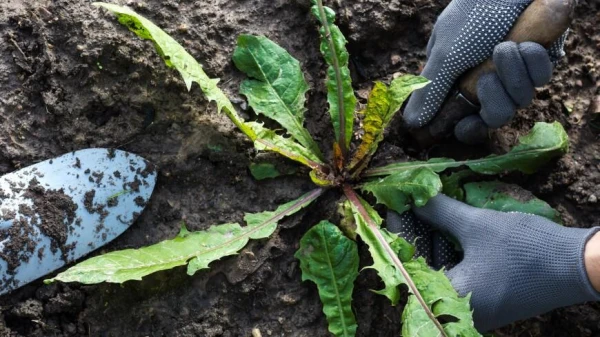
With the arrival of spring, gardens begin to come alive, leading to the emergence of weeds alongside blooming plants. This not only spoils the aesthetic appearance of well-kept greenery but also harms flowers, vegetables, shrubs, and trees.
Weeds can serve as carriers of pests and various infections, and those with deep root systems can degrade soil quality. We offer several effective ways to get rid of unwanted weeds without the lengthy and tedious process of hand weeding. Here are the best time-tested home remedies for weeds.
Vinegar
This familiar product has many advantages: it is inexpensive, biodegradable, safe for the environment, people, and animals, and effectively combats unwanted weeds, ants, and other insects. However, when using vinegar in the garden, care should be taken to apply it only to the leaves of the weeds. Vinegar sprayed on harmless plants, sensitive vegetables, or newly rooted lawns can destroy them.
Before use, it is recommended to dilute vinegar with water in a ratio of 2:1, which is easiest to do with a spray bottle. To improve the adhesion of the solution, a few drops of dish soap can be added.
Salt
Like vinegar, a solution of water and salt mixed in a ratio of 4:1 effectively destroys weeds. It is important to apply the solution specifically to aggressive plants to avoid damaging neighboring species.
Baking Soda
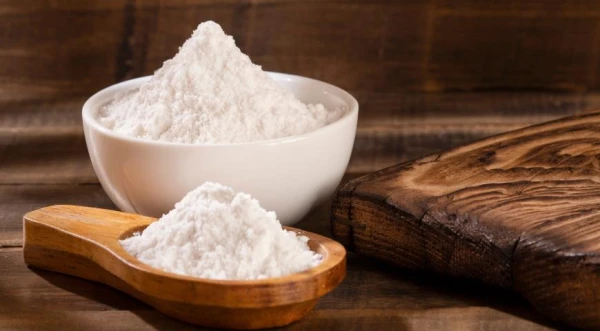
Well-known baking soda not only fights weeds but also fungal infections in plants, repels ants and other pests. Sodium bicarbonate also inhibits the growth of unwanted weeds — it is good to use immediately after weeding the beds to prevent the re-emergence of unwanted species. To clean driveways and garden paths, sprinkle soda into the cracks between the paving stones.
A water solution of soda can also be prepared (dissolve 6 tbsp. of soda and 1 tbsp. of grated household soap in 10 liters of water) and spray it on the weeds — this will have a similar effect. It is important to avoid spraying other beneficial or decorative plants to prevent damage.
Treat the paths with baking soda in the morning or evening, ensuring it is a windless day so that the white powder does not scatter throughout the garden. Since it acts on weeds a bit slower than vinegar or salt, such treatment is better repeated several times.
Alcohol
If you have pure alcohol, you can try treating the weeds in the garden with it. With controlled spraying, it effectively deals with even the most overgrown weeds.
Before use, do not forget to dilute the alcohol with water in a ratio of 1:13 (that is, for 2 cups of water, there should be no more than 30 ml of pure alcohol). Optionally, a few drops of dish soap can be added. Spray only the leaves of the weeds and conduct the treatment on a sunny, preferably windless day.
Fabric Bleach
Another home remedy for combating weeds is fabric bleach. If you spray the weeds with this product, the burned plants can be easily pulled out of the soil after a few days. Bleach also effectively destroys weed seeds in the soil.
Nettle Mulch
Using cut nettles as mulch in flower beds significantly reduces weed growth, so if you have nettles in your garden, do not rush to remove them. It is good to cover the soil under the plants with cut nettle stems, and the results can be surprising. This method has another advantage — nettles also nourish the soil, improve its structure, and enrich it with valuable nutrients.
Similarly, you can use mowed grass, which will also cover the soil and suppress emerging weeds while nourishing the soil. Keep in mind that cut plant parts decompose quickly, so this natural mulching should be repeated (even several times during the season).










Leave a comment