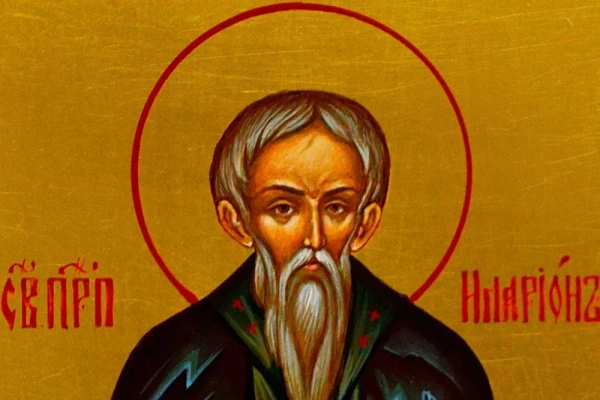
On March 6, Orthodox Christians commemorate the martyrs of Apamea — St. Mauritius and 70 warriors who lived in the 3rd to 4th centuries. In the folk calendar, this day is called St. Mauritius Day. At this time, our ancestors began agricultural work and tried to predict whether the harvest would be successful or if they would constantly worry about how to feed their families.
On March 6 (March 7 in a leap year), Orthodox Christians commemorate St. Mauritius. This military leader, who secretly professed Christianity, lived in the 3rd to 4th centuries in the Syrian city of Apamea. When persecutions against Christians began, Mauritius and his son Photios were arrested by order of Emperor Maximian Galerius.
The prisoners were brought to trial. The pagans demanded that they renounce their faith in Christ, but they received a resolute refusal. The court sentenced them to terrible tortures, which both endured.
The soldiers serving under Mauritius decided to share the fate of their leader. They were also subjected to brutal tortures: they were tortured with fire and beaten with iron rods. Mauritius's son had his head cut off while his father was forced to witness the execution of his beloved son.
After this, the prisoners were stripped naked, smeared with honey, and driven into a swamp. Before their death, they suffered from the bites of horseflies and mosquitoes, and after ten days, they died. The relics of the unconquered warriors found rest in Cyprus.
Folk Calendar: St. Mauritius Day
In the folk tradition, the holiday celebrated on March 6 was known by various names: St. Mauritius Day and simply Mauritius. In ancient times, agricultural work began on St. Mauritius Day. Usually, snow still lay in the fields, but this did not prevent people from hauling manure. The people hurried to do this while the roads were firm. “The frost creaks on Mauritius, but it no longer freezes.”
Manure was used as fertilizer. Thanks to it, a good harvest could be obtained. “Spread the manure thickly — the barn won’t be empty”; “I brought a pile of manure — and I don’t bother God (that is, I don’t trouble Him)”; “In the field, manure, in the barn, bread,” the people said, emphasizing the value of the fertilizer that was collected all winter.
To ensure that the manure was beneficial and did not wash away like water in sand, certain rituals were followed. For example, it was not buried in the ground during the full moon or new moon. If this was neglected, a lot of weeds would grow, and the harvest would be poor. Manure was introduced into the soil during the last quarter of the moon.
St. Mauritius Day: What Can Be Done
The morning began with visits to churches, prayers, and lighting memorial candles. During the service, people turned to the Apamean martyrs — Mauritius and the soldiers, asking them to strengthen their souls and give them the strength to endure all hardships. One could ask the holy martyrs for healing from illnesses and help with household matters.
St. Mauritius Day was spent in ordinary chores related to household management. While the men were hauling manure to the fields, their wives were busy preparing food and caring for the children. On Mauritius, they prepared what was called black fish soup. The fish was boiled in cucumber brine with a lot of fragrant herbs and roots. It was believed that such soup would strengthen health and give the strength to endure the spring.
On the night of St. Mauritius Day, prophetic dreams were said to occur. If the dream was good, it was worth remembering, as it would surely come true.
On St. Mauritius Day, special rituals were performed. One of them was related to birds. In ancient times, it was believed that if a girl saw a swallow, she must wash her face with milk. This would help preserve her beauty and prevent it from fading too soon.
It was also customary on St. Mauritius Day to “communicate” with the sun. People would turn to it with requests for a good harvest: “Morning dawn, let my land be clean. Take away all the bad from it so that everything thick and full may grow on it. Amen.”
St. Mauritius Day: Folk Omens
St. Mauritius can tell many interesting things about the weather. For example, if it is cold outside on March 6, the summer will be rainy. If the sun is shining, the year will be warm. If there is no hint of rain outside, the autumn will be gentle.
If the rooks manage to arrive by St. Mauritius, there will be no more severe frosts. If you can hear doves cooing in the morning, a sharp warming can be expected. If a snowstorm is blowing, spring will be prolonged.
St. Mauritius Day: What Not to Do
The folk holiday has its own prohibitions. Our ancestors tried not to violate them, knowing that it could be dangerous. On St. Mauritius Day, it was forbidden to engage in divination. Rituals are one thing, but fortune-telling is not allowed, otherwise, one could bring misfortune upon their family.
Household chores not related to cooking, such as washing and ironing, were also preferred to be postponed to another day. It was said: “Softly lays, but harshly sleeps.” On St. Mauritius Day, it was forbidden to:
engage in any kind of handicraft — to illness;
raise one’s voice at the elderly and children — to prolonged quarrels in the family;
use someone else’s towels — to take on someone else’s problems.
On St. Mauritius Day, sweeping and mopping the floors was not done, as it was known that with the garbage and dirty water, one could inadvertently remove luck and financial well-being from the house. Moreover, during this time, it was forbidden for men to greet women first. The elders said that there would be no respect in families.