
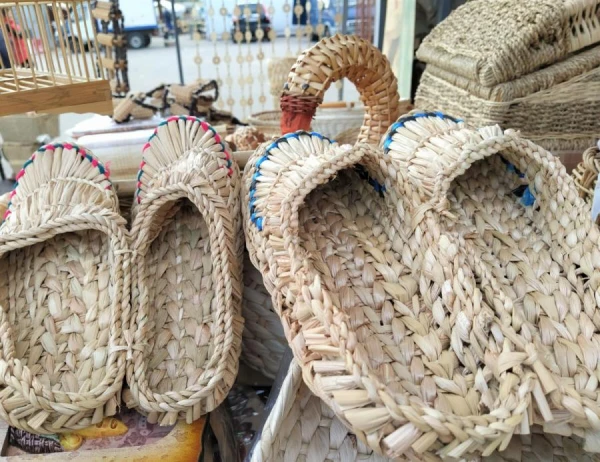
On February 22, Orthodox churches commemorate the martyr Nikifor and the venerable Pankratiy of Pechersk. In the folk calendar, this day is called Lapteva. During this time, shoe repairs, household utensil fixing, bast shoe weaving, and checking food supplies were conducted.
On February 22, Orthodox believers commemorate the martyr Nikifor of Antioch, who lived in the 2nd century, and the venerable Pankratiy of Pechersk, who existed in the 13th century.
According to legends, the great martyr Nikifor of Antioch was executed instead of his friend Saprikiy, with whom he had quarreled. When the persecution of Christians began, Saprikiy, being a church elder, received an order for execution. Nikifor tried to reconcile with him, but his former friend, who had become an enemy, did not want to listen to him.
When Saprikiy learned of his impending execution, he became frightened and renounced his faith in the Almighty. Upon learning this, Nikifor declared that he was a Christian and was ready to accept a martyr's death.
Little is known about the venerable Pankratiy of Pechersk. He led a hermitic lifestyle, dwelled in caves, and practiced asceticism. He devoted all his time to fasting and prayers, for which Jesus rewarded him with the gift of miracles.
Folk Calendar: Lapteva Day
The folk holiday dedicated to the venerable Nikifor of Antioch and Pankratiy of Pechersk had various names. Some called it “Lapteva Day,” others — “Lapotnik,” “Pankraty,” “Nikifory – Pankraty,” or “Drippers.”
No matter what this day was called, everyone knew that according to traditions, it was necessary to engage in shoe repairs, fixing household utensils, and weaving bast shoes.
The bast shoes made on Pankratiy had a dual purpose. They served not only as footwear but were also considered a powerful talisman. In ancient times, bast shoes were hung at the entrance to the house and on the gates.
The people understood that there was very little time left until spring, and soon the sowing work would begin. To ensure everything went smoothly, on Lapteva Day, people worked from morning until late evening.
Lapteva Day: What Can Be Done on February 22
People knew: since the holiday does not tolerate idlers, one should not sit idle. “If Pankratiy has work in hand — the owner has bread in his mouth.”
On Lapteva Day, women engaged in household chores from early morning until evening. They prepared food and cleaned the house. It was believed that during this time, to attract good luck, one should beat the rugs.
Good luck and happiness were also promised by new clothes purchased on Pankratiy. For this, money was set aside in advance. It did not matter what exactly was bought, even small items, the main thing was that there were new things in the house.
On this day, it was necessary to conduct an inventory of food supplies, checking the grain that was taken out to the frost. According to signs, this guaranteed a good harvest. “Not everyone Pankratiy is rich in bread,” they said, hinting at the need for frugality and preparation for spring to avoid food shortages.
Lapteva Day: Folk Omens
Lapteva Day, like all folk holidays, has its omens related to the weather. In ancient times, it was known: if on February 22 (February 9 in the old style) there are severe frosts, winter will linger for a long time.
The people understood: the colder the week starting on Lapteva Day, the warmer March would be.
If there was a lot of snow stuck to the trees, it foretold a thaw. The stars on the night of Nikifor said the same. If pigs in the barn squealed and were restless, it meant that there would be severe frosts in the coming days.
Lapteva Day: What Not to Do
Lapteva Day is a family holiday that does not imply troubles. However, there were certain prohibitions that could protect from misfortunes. On Lapteva Day, our ancestors prohibited:
Being lazy, spending the day in idleness — this can lead to financial difficulties.
Sweeping the floor, especially if one needs to set off on a journey — leads to illness.
During repairs, placing shoes on the table — leads to misfortunes.
Leaving shoes with the toes facing the door — it foretells that you will not return home.
Moreover, on Lapteva Day, it was strictly forbidden to compliment girls, to tell them how beautiful and lovely they are. The elders warned: after this, the young lady would lose her attractiveness and would not be able to find a suitor.















Leave a comment