
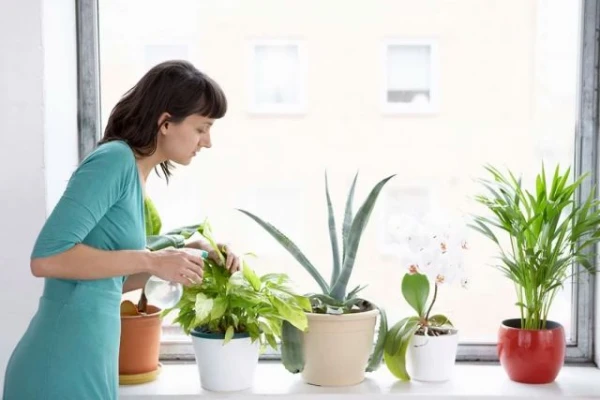
The water left after boiling vegetables can be used not only in the kitchen but also beneficially for plants.
If the vegetables were boiled without salt, this liquid is suitable for watering houseplants and garden crops. Agronomist Denis Terentyev elaborated on this type of plant fertilizer.
Why Vegetable Broth is Beneficial for Plants
During boiling, minerals and organic substances pass into the water in an easily digestible form (which is why vegetable broth is also beneficial for humans!). This type of fertilizer is equally beneficial for plants! The broth gently affects the soil microflora, supports the root system, and helps plants quickly obtain nutrients that they are deficient in.
How to Prepare Broth for Plants
For fertilization, vegetable broth can be specially prepared, not just used from leftovers after cooking. Vegetable peels and trimmings are suitable: potato skins, cabbage leaves and cores, carrot peels, and herb stems. Before boiling, it is recommended to chop these waste products as finely as possible (ideally, blend them) — nutrients are extracted in greater quantities from the chopped vegetable parts.
Vegetable trimmings are covered with water, brought to a boil, and boiled for 15–20 minutes without salt and spices. After that, the broth is cooled and used within a day.
If the broth starts to sour, it’s not a problem. Do not water the plants with it while it is fermenting. Wait a week until the fermentation is complete, and then water the plants. This will be a fermented infusion with microorganisms.
How to Water Plants Properly
Watering with broth should be done no more than once a week. For small pots, a few tablespoons are sufficient, while for larger plants — up to a cup. In garden beds, adjust according to the size of the plants and the moisture of the soil.
Such broth should not be used for plants that do not tolerate excess moisture well. Additionally, do not use water if salt or spices were added to it.
A simple tip helps reduce kitchen waste while simultaneously supporting plants in a natural way.
Another Way to Use It
The boiled and chopped vegetable parts can also be used as fertilizer by simply tossing them onto the garden beds (it’s better to lightly incorporate them into the soil — this way they will become food for worms faster or decompose, making nutrients available for the plants). In small amounts, this boiled pulp can also be buried in flower pots.
Such fertilization is suitable for most fast-growing plants. Exceptions include cacti and other succulent plants that do not like a lot of organic matter in the soil.
Using vegetable broth is a simple example of a sensible approach to household management. It helps reduce waste, cut down on fertilizer expenses, and simultaneously supports plants in a natural way. Sometimes the most effective solutions are literally at hand.







Leave a comment