
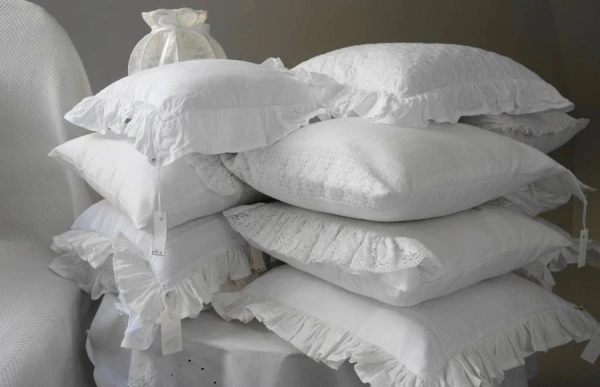
You have probably noticed that different pillows affect sleep quality differently: one helps you feel rested, while another causes headaches and muscle spasms. Why this happens and how to understand that it is time to part with your pillow is explained by orthopedic trauma doctor Mikhail Ignatov.
Nine Signs That You Should Replace Your Pillow
Lack of energy and feeling unwell in the mornings is not the only signal that your pillow is not right for you. In fact, there are many other signs:
Morning headaches. An improper pillow can be one of the causes of headaches in the morning. Moreover, discomfort in the eye and head area can persist throughout the day. This is because there are muscles in the neck that transmit nerve impulses to the skull. Due to strain caused by an uncomfortable sleeping position, the nerves can become compressed, leading to pain in the eyes and the front of the head.
Pain and stiffness in the neck muscles. An unsuitable pillow does not provide the neck with conditions for full relaxation. The head and neck remain in an uncomfortable position all night, leading to muscle tension and stiffness.
Frequent back pain. Due to a pillow that is too high or too low, the spine may be in an incorrect, curved position, resulting in back pain.
Difficulty finding a comfortable sleeping position. If you toss and turn for a long time and cannot find a comfortable position, this may be a signal that it is time to change your pillow.
Digestive problems. An improper body position during sleep can exacerbate some gastrointestinal disorders, such as gastroesophageal reflux disease (GERD).
Increased snoring. Snoring and sleep apnea (breathing disorders) can occur and worsen due to improper positioning of the head and neck during sleep. The main cause is an unsuitable pillow.
Signs of allergies. If headaches are accompanied by watery eyes, sneezing, and general malaise, do not rush to the pharmacy for cold medicine — pay attention to your pillow. Most often, down and feathers in the pillow filling cause allergies and create favorable conditions for dust mites to thrive.
Skin problems. If you care for your skin, regularly change pillowcases, and have undergone all possible tests, but acne and pimples continue to bother you, consider replacing your pillow with one that has an antibacterial cover.
Insomnia. Frequent awakenings at night can also be caused by an unsuitable pillow: the body remains in an uncomfortable position for too long, making sleep restless and interrupted.
Why Sleeping on the “Wrong” Pillow is Harmful
Chronic sleep deprivation itself causes many problems: from decreased productivity to hypertension and diabetes. However, the position of our body during sleep is also of great importance, as we spend about a third of our lives in bed.
An improperly chosen pillow leads to muscles and joints being in constant tension and not relaxing even during sleep. This can cause pain, the origin of which is not always obvious, and although it can be treated for a long time, without identifying and eliminating the root cause, therapy will not be effective.
Therefore, choosing the right pillow will not only ensure quality sleep but also help prevent many diseases.
How to Choose a Pillow for Comfortable Sleep
The main criterion for a proper pillow is your subjective feeling of comfort. That is why specialists recommend lying on the product in the position you usually sleep in before purchasing. If you feel even minimal discomfort, it is better to refrain from buying.
Here are some other factors to consider:
Size. The pillow should not be too large or too small. The recommended size for adults of average build is 40×60 cm.
Height. The universal height that is suitable in most cases is 9–14 cm; however, depending on body type and preferred sleeping position, this parameter may vary. For example, broad-shouldered individuals should choose a taller pillow, while those who sleep on their back should opt for a lower one.
Firmness. This parameter is also selected based on the position in which a person sleeps. Those who sleep on their back are recommended to choose firmer products, while those who sleep on their stomach should opt for softer ones.
Shape. Here, it is important to return to the beginning and remember the subjective feeling of comfort. The shape of the pillow is chosen based on personal preferences. The only exceptions are medical indications.
Filling material. The optimal choice is a filling with a “memory effect” — it provides maximum comfort and better support during sleep. However, there are many options for pillow fillings: from down, feathers, and buckwheat husks to latex and polyester. In this case, in the absence of contraindications or recommendations from a doctor, one should also rely on their own feelings of comfort.















Leave a comment