
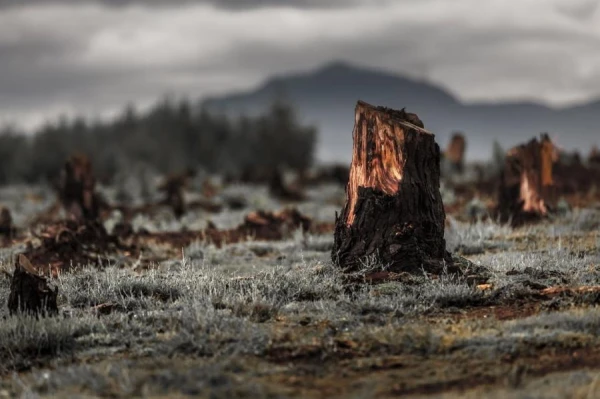
Slash-and-burn agriculture has long been considered an outdated and primitive technology.
A group of researchers from Ohio State University (USA), together with scientists from Belize and representatives of the Kekchi tribe, modern Maya, conducted a study on the impact of an agricultural system still practiced by indigenous peoples in Central America. The scientists analyzed over 7,000 hectares of land where slash-and-burn agriculture is practiced. The results showed that these regions are experiencing an increase in tropical forest biodiversity. The findings were published in the journal Communications Earth & Environment.
The researchers' conclusions challenge the widely held belief, supported by the UN and other international organizations, that slash-and-burn agriculture leads to global forest loss. This prompts experts to reconsider whether this system is as outdated as previously thought.
What Slash-and-Burn Agriculture Is
Slash-and-burn agriculture is a method that has been used by people for at least since the Neolithic era on all inhabited continents: in the forests of Europe, Asia, North and South America, as well as in Africa and the islands of Oceania. This approach involves cutting down or girdling trees in a specific area, followed by burning it and sowing crops directly into the ash. The area is cultivated for several years, after which it is left to allow the forest to regrow.
Anthropologists working in Kekchi villages in southern Belize knew that most locals practiced slash-and-burn agriculture, just as their ancestors did centuries ago. They decided to investigate the state of the forests affected by this practice. On community-owned lands, local farmers grow corn and other crops. They have norms and rules passed down through generations regarding the sizes of plots cleared in the tropical forest.
The scientists studied an area of 7,280 hectares, using remote sensing with drones and conducting terrain mapping. The results were as follows.
A Deep Understanding of Ecology
“In a mature forest, large trees create a canopy that blocks sunlight, preventing other plant species from growing on the forest floor,” explains anthropologist Sean Downey.
So what does slash-and-burn agriculture do? It opens up a section of the forest, allowing sunlight to penetrate and promoting the rooting and growth of other plant species.
However, the impact greatly depends on the rules followed by farmers. A key point is the correctly calculated size of clearings. If they are too small, in mature forests where few rare species are present, plants will not be able to spread widely and establish themselves. If the clearings are too large, the “bank” of rare seeds will be destroyed in the process, and trees will not be able to “return.”
According to the researchers' findings, the Maya employ the same processes as nature—when it “opens” sections of the forest to sunlight through lightning, hurricanes, and other natural phenomena.
The study quantitatively confirmed that indigenous peoples, by following their traditions, possess a deep understanding of the ecology of their lands. Their knowledge contributes to increasing forest biodiversity and preserving the ecosystem.
Meanwhile, the UN has already promised to take into account the opinions of indigenous peoples and engage in dialogue with them at the upcoming climate summit. According to the organization, it is traditional communities that conserve and protect 80% of the planet's biodiversity.











Leave a comment