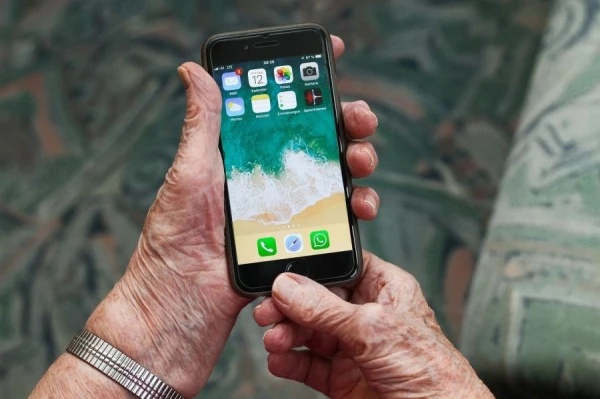
With the onset of cold weather, many notice that mobile devices lose charge faster. Experts have shared recommendations for careful handling of gadgets.
A phone can not only overheat in the summer heat but also discharge rapidly in the frost. Experts recommend minimizing the use of gadgets in cold weather, as they function optimally only at positive temperatures. If left in the cold for too long, the phone may completely shut down.
Cold air makes the screen and internal components of the smartphone more vulnerable. Therefore, any impact or fall can lead to device damage. To avoid such issues, there are special thermal cases that help maintain the phone's functionality even in frost. Both fabric and knitted cases, as well as products made of suede or synthetic materials, are suitable for retaining heat. Their action is similar to that of a down jacket: the cases create a kind of “cushion” of heated air.
Additionally, it is not recommended to leave smartphones in cars. In summer, they can be exposed to direct sunlight, and in winter — to low temperatures. The technical components of the device may be at risk. It is important to maintain thermal balance for the gadget. It is helpful to simply keep it warm. Outside, it is better to keep the phone in your pocket and make calls using headphones.
If a tablet or phone has frozen outside, it should be allowed to warm up indoors — and only then used. A sharp temperature change inside the device can cause condensation to form. It should be warmed naturally, without using heating devices.
Experts remind us that cold reduces the battery life of the device; most modern phones function optimally at temperatures above 0 °C. To slow down battery discharge, it is advisable to fully charge the phone before going out into the frost and to enable power-saving mode. In the settings, it is recommended to disable location services and close all applications running in the background to extend the device's operating time.