
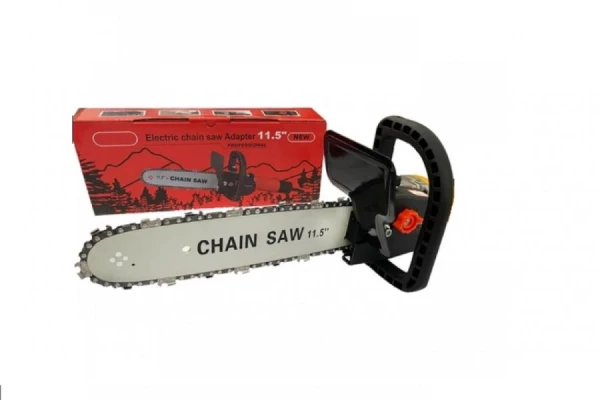
Experts explain how to handle a chainsaw in the garden and the forest without ending up in accident reports.
Autumn is a busy time for gardeners. Leaves turn yellow, branches dry out, and it’s time to get out the main helpers from the shed — the chainsaw, trimmer, and lawnmower. In winter, gardens and vegetable patches go into "hibernation," so it’s necessary to prepare the area for this. Garden and home equipment expert Anna Nuzhina shared life hacks on how to do everything safely and easily.
Gas or Electric Saws: How to Choose and Use Safely?
With a chainsaw, any branches will succumb, and the garden will transform before your eyes, so there will be fewer worries come spring. But to ensure the work goes smoothly and doesn’t end with a visit to the trauma center, it’s essential to choose the right tool and follow safety protocols. Anyone can manage this; the main thing is to read the instructions carefully.
Do you want to try on the role of chainsaw master? Then look for saws with at least 3 horsepower. The length of the bar should also be appropriate; for serious tasks like cutting logs or trimming trees around your garden "castle," it’s better to choose one that is at least 45 cm long. It’s also important to consider the height and weight of the user — try it out to see if the tool is too heavy or awkward due to its size.
When choosing a saw, make sure it is equipped with a safety feature against accidental activation — a start lock. This guarantees that the saw cannot be accidentally started; a combination of lever presses will be required.
For more delicate tasks like trimming branches or shaping plants, it’s better to choose a compact electric saw. A power of 2000 W will be sufficient, and you can limit yourself to a bar length of 30–40 cm.
How to Properly Choose a Good Chainsaw
But before you pick up any tool, make sure you are equipped like a true garden ninja — the requirements for your outfit are much simpler than those of real Japanese mobsters.
- Check your gear. Let’s go through the list: helmet, goggles, gloves, work clothes, and ear protection — this is your armor against treacherous branches and flying splinters.
Don’t even think about wielding a saw in trendy skinny jeans or flip-flops: one wrong step and the jeans are torn. Only comfortable closed shoes and work clothing. Pay special attention to what you are standing on. If there’s a puddle underfoot, find another surface, and make sure the ladder is set up securely.
- Also, check the tool’s functionality: the chain should be well-sharpened and properly tensioned, and the brake should work like Swiss clockwork.
Before turning on the device, check the oil and gasoline levels or the battery charge level — it should be enough for a few trees and a couple of shrubs. By the way, the norm varies for each model, so arm yourself with the manual before starting work. And remember, there’s no need to rush, and this task can be unsafe.
- While working, remember that you are not in a theater: there’s no need to demonstrate flexibility and agility. A comfortable stance, a good line of sight, and a flat surface are the three pillars on which everything rests.
Never hold the chainsaw above your head and don’t use it in an awkward position — light branches can scratch your face, and larger ones can throw you off balance.
- When all the work is done and the garden looks no worse than a noble estate, turn off the device and store it in a safe, dry place. Next year, your saw will have its star moment again.














Leave a comment