You often hear advice: disinfect your pruners after cutting sick plants. But nowhere does it specify what and how to do this? We explain why it is necessary to disinfect garden tools, whether it is mandatory, and what means to use.
If tools are used for pruning or digging up a sick plant, they should be cleaned and disinfected immediately before moving on to a healthy one. So keep a bucket, chlorine bleach, alcohol, or vodka handy to do this quickly and easily.
Why disinfect garden tools?
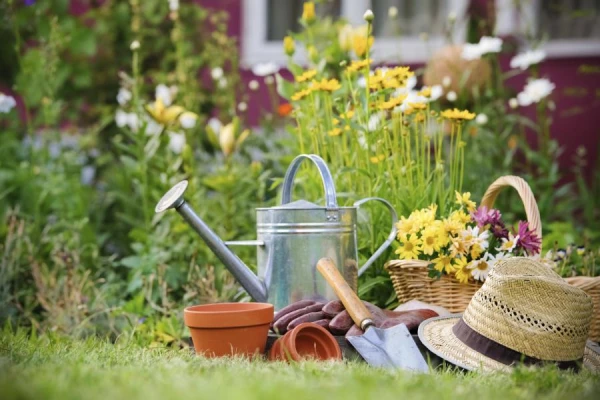
When plants show symptoms of disease, there is often no choice but to cut away the sick parts or dig up the entire plant. Always, pruners, scissors, loppers, hedge trimmers, saws, etc., are used in this process.
But gardeners often do not know and do not even think about the fact that dangerous microorganisms and fungal spores can get onto the blades and handles, work gloves, clothing, and other items that have been in direct contact with the plant. It is easy to guess that spreading infection throughout the garden and infecting other plants with dirty tools is a simple matter.
Cleaning garden tools helps prevent rust formation and keeps metal tools from dulling prematurely, but most importantly, it prevents the cross-contamination of fungal and viral plant infections, as well as some insects, such as aphids.
To sterilize the tools used for pruning plants, their cutting parts are usually dipped, soaked, sprayed, or wiped with a disinfectant. Some garden tool manufacturers produce special disinfectants, but most gardeners use makeshift, inexpensive solutions that are almost always on hand. Below are three of the simplest and most convenient.
What solutions to use for disinfecting garden tools
Here are some of the most popular solutions that can be used for treating garden tools.
Chlorine bleach
The cheapest bleach can be used as a disinfectant for garden tools. It is diluted with water in a ratio of 1:9, and tools or at least their blades are soaked in the solution for about half an hour after contact with sick plants, then rinsed and dried.
When there are many plants to prune quickly, there is no time for soaking the tool, so some foresighted gardeners carry a bucket of bleach solution with them and dip the pruner blades into it after each cut.
If you are pruning a few bushes or trees, which is often the case, this method is quite convenient. But the problem with bleach is that over time it can damage the metal, rubber, or plastic parts of some tools, and it can also get on clothing and leave stains.
Alcohol
You can also use 70-100% isopropyl alcohol to sterilize pruning tools. There is no need to soak or rinse in alcohol; it is enough to wipe the cutting parts with alcohol or a medical alcohol wipe. Most professionals use this method of sterilization.
Alcohol can also be replaced with regular vodka, which is conveniently poured into a spray bottle and periodically sprayed, then wiped on the working tool.
Turpentine or lighter fluid
After pruning some plants with sticky sap, tools can be wiped with a cloth soaked in turpentine or lighter fluid.