
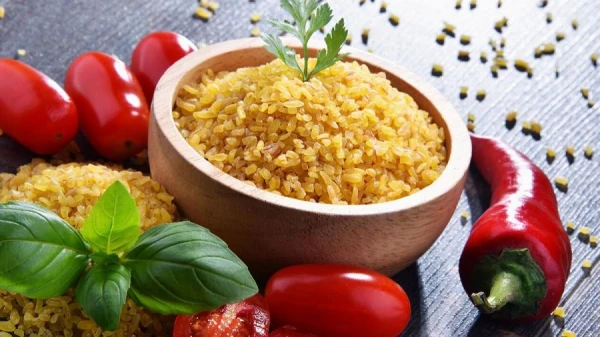
Bulgur is a popular product in the Middle East, known for its availability and nutritional value. It cooks quickly and requires no special culinary skills, as well as having many beneficial properties, which we will discuss in more detail.
What distinguishes bulgur from other wheat grains
Bulgur is not a separate type of grain but rather a cereal made from wheat kernels. At first glance, it may seem related to couscous, semolina, and cracked wheat, but this is not entirely accurate. All these products indeed come from the same plant; however, there are differences among them.
Semolina is produced from polished wheat grains, grinding them to a size of 0.25–0.75 cm. It cooks in just 3–5 minutes and has a neutral taste.
Couscous is made by more finely grinding the grain, after which small granules are formed. To prepare it, simply pour boiling water over the grain and let it sit for 3–5 minutes. This is a very delicate side dish, reminiscent of pasta in taste.
Cracked wheat undergoes minimal processing and consists of whole grains that have been broken into several pieces. It takes longer to cook — from 20 to 40 minutes after boiling — and has a characteristic nutty flavor.
To produce bulgur, whole wheat grains are first steamed, then dried, and only after that are they cracked. As a result, the grain retains a pleasant nutty hue. Depending on the size, bulgur cooks in 5 to 20 minutes.
Bulgur has a close “relative” — freekeh. This grain is obtained by roasting the kernels over fire or by toasting them before the final drying and cracking.
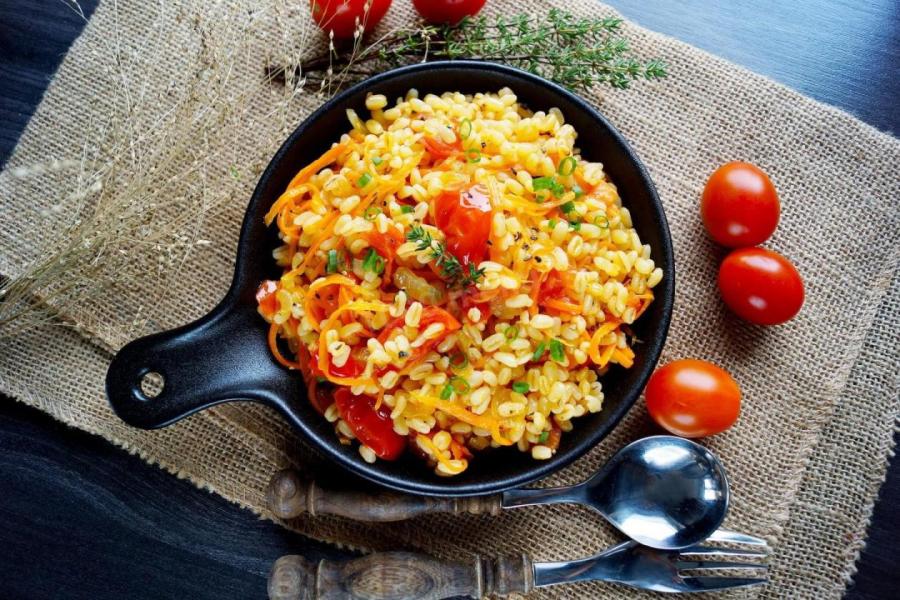
How to Cook Bulgur in Three Ways
The packaging of bulgur usually indicates how long it takes to cook (this depends on the size of the grain). There is no need to rinse the grain, as it has already been processed and is ready for use. Additional water manipulation can diminish the benefits of bulgur, while pre-roasting with a small amount of oil will enhance its nutty flavor.
Preparing Sweet Porridge from Fine Bulgur for Breakfast
Follow the classic ratio of 1:1 (liquid + grain). If you prefer a more liquid porridge, you can increase the amount of water or milk. This dish cooks in no more than five minutes after boiling, and in the absence of a stove, you can simply pour boiling water over fine bulgur and let it steep for about ten minutes.
Preparing Soup from Medium-Sized Bulgur
The soup cooks for about the same time as finely chopped potatoes, so it is best to add these ingredients to the broth simultaneously, adding the vegetable sauté later.
Preparing a Side Dish from Coarse Bulgur
Slightly roast the dry bulgur in oil in a frying pan or saucepan, then pour in water, add salt, and cover with a lid. After 15–20 minutes, the side dish will be ready.
Bulgur pairs well with various products. It can be used instead of rice for pilaf and even sushi, served with shrimp or fish, mixed with vegetables, and seasoned with favorite spices. It can be prepared as hearty dishes or sweet ones, including desserts.
Three Reasons to Choose Bulgur: The Health Benefits of Steamed Wheat
High Fiber Content for Gut Health and Strong Immunity
This property sets bulgur apart from many other carbohydrate side dishes. Cooked bulgur (100 g) contains about 4.5 g of fiber, which is ten times more than rice and one and a half times more than buckwheat and pasta. This makes it very beneficial for the gut, immune system, as well as for the heart and blood vessels.
Nutritional Value and Low Caloric Content for Weight Control
Bulgur can be used as an additional aid in the fight against excess weight. Its carbohydrate content is comparable to that of buckwheat, while its fat content is three times lower. Compared to rice, bulgur is almost twice as low in calories. In other words, it is a light food that allows you to feel full without overeating.
High Vitamin Content for Youth and Energy
Bulgur is rich in vitamins B1 (thiamine), B3 (niacin), B6 (pyridoxine), and B9 (folic acid). It surpasses both buckwheat and rice and pasta in almost all these indicators. B vitamins support the stable functioning of the nervous and cardiovascular systems, beautiful nails and hair, youthful glowing skin, healthy mucous membranes, and good metabolism.
What to Look for When Choosing Bulgur
As you have already understood, bulgur comes in three sizes — fine, medium, and coarse. Additionally, it is divided into regular and whole grain (the latter is considered more beneficial). Regular bulgur is polished after drying, while whole grain retains the husk and endosperm, which are rich in beneficial nutrients.
When choosing bulgur in the store, pay attention to the packaging. It is best to choose a sealed package with a transparent window through which the contents can be clearly seen. Bulgur should appear clean and uniform in size. Don’t forget to check the production date: the shelf life of this product does not exceed one year.









Leave a comment