
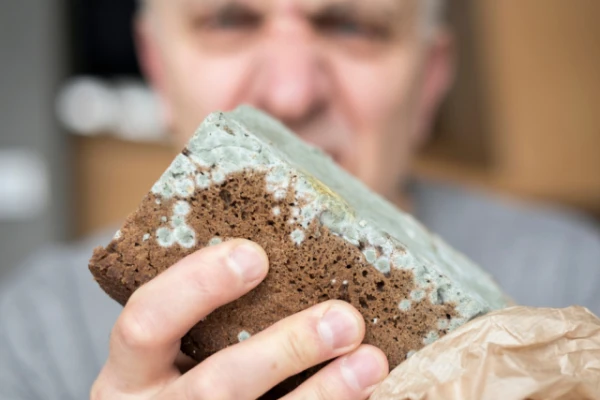
When mold appears on products, they should be discarded immediately, even if only a small area is affected. This was stated by expert Elena Spetsenko.
According to the specialist, mold fungi form microscopic threads (hyphae) that can penetrate deep into the product. Additionally, some types of mold produce toxic substances that can persist even after thermal processing and accumulate in the body.
Soft products with high moisture content are particularly dangerous: vegetables, fruits, dairy products, and baked goods. Even if visible mold is removed, toxins may remain in the remaining part. For example, aflatoxins—substances that damage the liver—are often found in grains, nuts, and jams.
Mold fungi reproduce through spores that may be invisible to the naked eye but are still present on the surface of products. Therefore, the expert advises thoroughly washing dishes and refrigerators after storing moldy products.
Regular consumption of even small doses of toxins produced by mold can lead to chronic liver diseases, allergic reactions, and reduced immunity. Moldy products pose the greatest danger to children, pregnant women, and people with chronic illnesses. To prevent food spoilage, it is important to adhere to storage conditions and monitor expiration dates, the expert emphasizes.










Leave a comment