
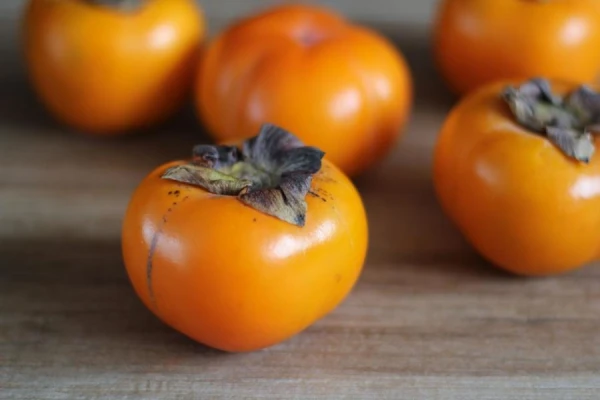
Persimmon, a sweet and juicy fruit, has many fans. However, astringent persimmon does not evoke such enthusiasm. In the store, you may encounter fruits of varying quality and taste. Even if you come across a less-than-ideal persimmon, there are methods to make it less astringent. Choose any of the suggested methods.
Reasons for Astringency in Persimmon
To understand how to make persimmon sweet and non-astringent, it is necessary to comprehend why it can cause such sensations. The astringent properties of the fruit are due to the presence of tannins — substances that interact with proteins in the mouth, causing unpleasant sensations. Tannins are found not only in persimmons but also, for example, in wine, tea, and some berries.
A high concentration of tannins can be caused by two main factors. First, the persimmon may be insufficiently ripe. Most often, such fruits are found at the beginning of the season. Ripe fruits, which are soft and even watery (some might call them “soggy”), are harvested early to avoid damage and rotting during transportation. Therefore, at home, you will need to work with them a bit.
Second, you may have chosen a variety with a high tannin content. Some types of persimmons have more tannins, while others have less. Remember the sweeter varieties and try to choose them first. By the way, we have a guide to popular persimmon varieties, where their differences are described in detail.
Health Benefits of Astringent Persimmon
Despite its taste qualities, astringent persimmon is still beneficial. Although it may seem not very tasty, it contains many vitamins: A, C, B group, as well as calcium, phosphorus, and iron (this is just a small part). We wrote in detail about the health benefits of persimmon in another article.
Tannins also have their advantages. They are antioxidants and plant substances that can reduce the risk of serious diseases, including cancer. Additionally, tannins have antibacterial properties and help reduce inflammation.
However, there is an opinion that tannins can be harmful. Such an approach to foods can significantly limit the diet. Therefore, it can be said that in ripe and sweet persimmons, the tannin content is so low that they are unlikely to have a negative impact on the body. And an insufficiently ripe fruit can be brought to perfection so that it does not astringe.
Among the negative properties of tannins, one should note that they can hinder the absorption of iron and eventually lead to iron deficiency anemia. However, this is unlikely due to persimmons. It is better to avoid drinking tea (which has more tannins) with food. It is sufficient to consume the beverage separately from meals and regularly check hemoglobin levels and iron stores in the body as part of a medical examination. This will significantly reduce the risks.
Ways to Reduce Astringency in Persimmon
Let’s consider three simple and effective methods that any housewife can manage.
Method 1. Place the persimmon in warm water or dip it in boiling water, then let it sit at room temperature for a while. Under the influence of heat, some of the tannins will break down, and the fruit will become less astringent. However, this may affect its texture. Try it to see if this option suits you.
Method 2. Put the persimmon in the freezer and let it freeze. After that, defrost it, preferably in the refrigerator. Persimmons that have undergone shock treatment will astringe significantly less. Proven in practice.
Method 3. Allow the persimmon to ripen at home. Yes, there are non-astringent varieties of persimmon, but if you prefer others and want to enjoy their taste, let the fruit reach full ripeness. Place it in a vase with bananas or put it in a paper bag, leaving it at room temperature. In two to three days, the persimmon will become perfect.
Persimmon Varieties: Astringent and Non-Astringent
To avoid getting confused in the store among various names, such as “shish burun,” “persimmon,” “bull's heart,” remember a simple rule: how to determine whether a persimmon is astringent or not. Varieties that may disappoint usually have an elongated, slightly conical shape. When ripe, they are soft, even watery, while unripe ones are astringent and slightly bitter. Such varieties include “sharon,” “hachiya,” “candle,” “bull's heart.”
Non-astringent types are more often flattened in shape. They have a dense but not hard flesh, often with few or no seeds at all. Non-astringent varieties include “korolek,” “romashka,” “chocolate” persimmon.







Leave a comment