
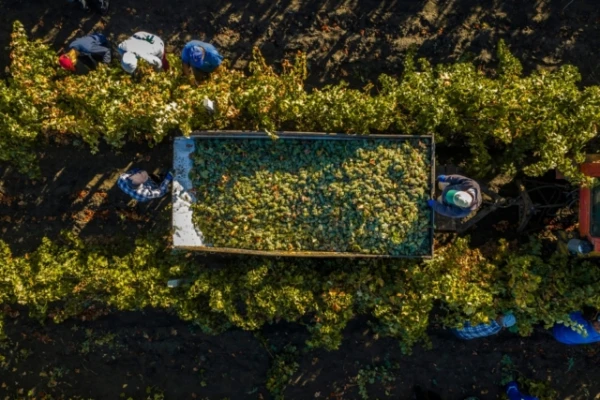
Scientists from Kyoto University have revealed the secret of ancient winemaking: instead of fresh grapes, they used sun-dried raisins. This reliably initiated fermentation due to the natural accumulation of Saccharomyces cerevisiae yeast on the shriveled skin.
A team of experts took fresh grapes from the garden and subjected them to three drying regimes: 28 days in an incubator, in direct sunlight, or combined. The raisins were then soaked in water at room temperature for two weeks, repeating the experiment three times. Only the samples dried in the sun successfully fermented and produced a high level of ethanol. In them, microbial diversity decreased, and alcohol-tolerant yeast became dominant.
Sun drying concentrates sugars, creating a favorable environment for yeast, and brings in microorganisms from the air, dust, or insects — things that are absent in laboratory conditions. Over-dried raisins soaked in water turned into wine in two weeks without complex equipment. This explains the success of ancient winemakers without pure yeast cultures: just sun, time, and fruit were enough.
History confirms the discovery: raisin wine is mentioned in Talmudic literature, and in Greece and Rome, grapes were also dried for sweet beverages.
If you want to try the methods of the ancients, remember that modern store-bought raisins with oil coating will not work — natural drying of the berries is needed.










Leave a comment