
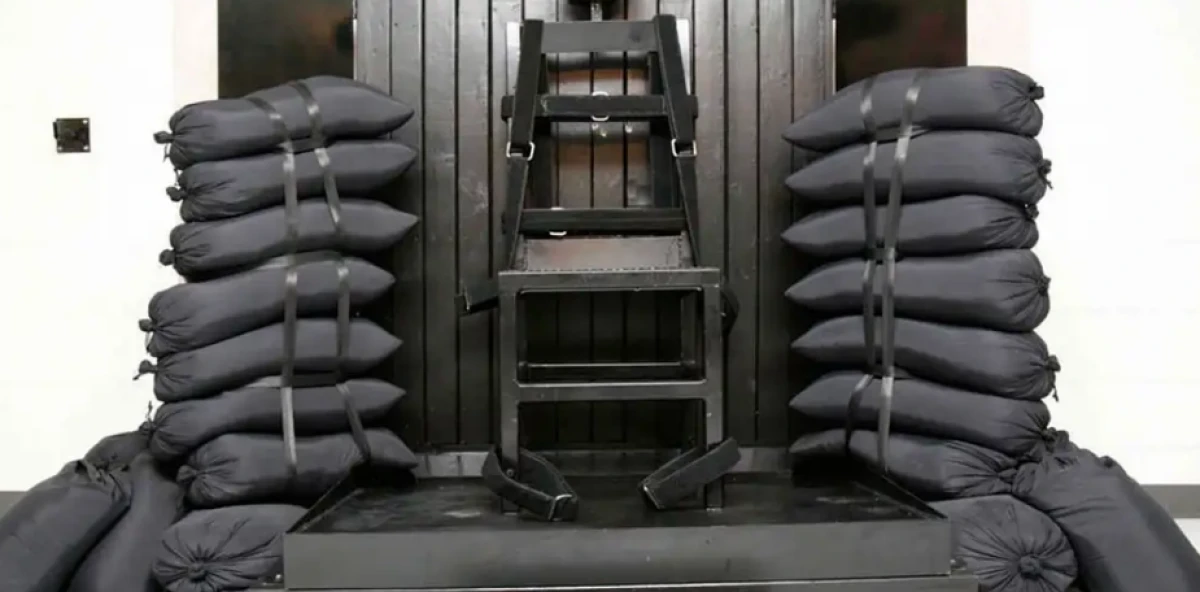
Pentagon chief Mark Esper stated that he would seek to carry out death sentences.
The U.S. Army may carry out executions for the first time in more than half a century against former service members. The execution of four individuals on death row could take place if the initiative is approved by U.S. President Donald Trump. Army representatives informed the Task & Purpose portal about the plans.
The plan developed by the Army for the execution of Americans sentenced to death for murders and rapes is called Operation Resolute Justice. It involves transporting the convicted from prison in Fort Leavenworth (Kansas) to the federal execution center in Terre Haute (Indiana) — the place where all federal executions have been carried out since 2001.
Last month, the U.S. Department of Justice lifted the moratorium on federal executions and approved lethal injection as one of the methods of carrying out the sentence. The department also streamlined internal procedures to expedite the review of death penalty cases. It is not specified how the former service members may be executed.
As ABC News clarifies, the internal plan requires several units of the U.S. Army to prepare and ensure the execution of the order no later than 150 days after its approval by the president. The document contains schedules for coordination meetings and a course of action in the event of receiving the corresponding order from the White House. Additionally, it includes measures for interacting with the media.
"Exercises for this operation have been conducted regularly for the past 20 years. These drills are a standard element of our continuous planning and preparation in case the president approves a death sentence. To date, the president has taken no action regarding the three convicted individuals whose death sentences have not yet been approved by the president," said Army representative Cynthia Smith.
In September of last year, U.S. Secretary of Defense Mark Esper stated that he would seek to carry out the death sentence against Nidal Hasan, convicted of a mass shooting at Fort Hood in 2009. Thirteen people died and 32 were injured as a result of his actions.
"I am 100 percent committed to ensuring that the death sentence for Nidal Hasan is carried out. The victims and survivors deserve justice without further delays," Esper stated.
Another inmate is former Army Sergeant Hasan Akbar, convicted for a grenade and firearm attack at Camp Pennsylvania in Kuwait in 2003. The attack resulted in the deaths of a U.S. Army captain and an Air Force major, with 14 others injured. In May, Secretary of Defense Esper awarded the injured veterans with Purple Heart medals.
The oldest case among the inmates on military death row concerns former service member Ronald Gray. In 1988, a military court found him guilty on 14 counts, including premeditated murder, attempted murder, and the rape of three women, two of whom were service members. In 2008, U.S. President George W. Bush signed an order for the execution of the death sentence, but the decision was challenged in federal court. In 2016, the court lifted the ban, and by 2017, the military court rejected the final appeal.
The fourth individual is former Master Sergeant Timothy Hennis. In 1985, a North Carolina state court found him guilty of murdering a woman and two children during his service at Fort Bragg. Later, the state Supreme Court overturned the conviction, as the repeated display of victim photographs could have influenced the jurors. In 1989, Hennis was acquitted, but subsequently faced trial again under military justice.
From 1916 to 1961, the U.S. Army carried out 135 death sentences. Although military courts can still impose the death penalty today, the last execution took place in 1961. At that time, U.S. Army Private John Bennett, a 19-year-old service member, was hanged for the rape and attempted murder of an 11-year-old girl.














Leave a comment