
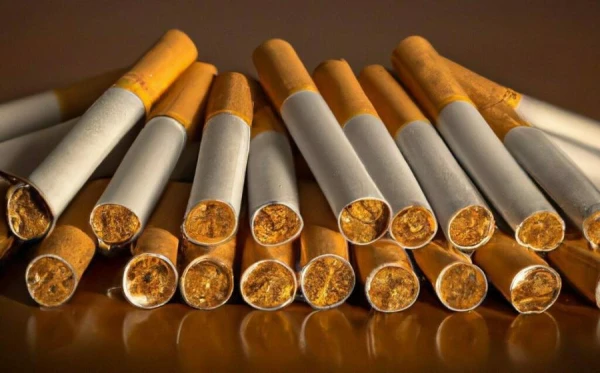
Latvia occupies a significant place in the network of illegal cigarette production in Europe, according to a recent study by the London-based international market research company "Euromonitor International," reports LETA.
The study emphasizes that historically Latvia has been one of the central routes for smuggling Belarusian-produced cigarettes into Europe; however, its role in the international organized crime network is gradually changing. In particular, in 2024, Latvia has seen a significant increase in the production of counterfeit cigarettes within the country.
Researchers note that since the early 2010s, there have been gradual changes in the strategy of organized crime regarding the distribution of illegal cigarettes in the European Union as a whole — the EU is transforming from a primary endpoint for smuggling into an increasingly important center for the production and consumption of counterfeit cigarettes. Accordingly, Latvia's role as a transit country has also changed: criminal groups are increasingly seeking to produce counterfeit cigarettes directly in Latvia, as evidenced by the recent uncovering of large underground operations.
Increased border control, as well as sanctions against Russia and Belarus, have significantly reduced the opportunities for smuggling counterfeit cigarettes into the EU. From 2023 to 2024, the volume of smuggling decreased from 2.1 billion to 1.5 billion cigarettes. Adapting to these changes, organized crime groups have been forced to refocus on increasing the production of counterfeits within the EU, notes "Euromonitor International."
Researchers emphasize that the demand for counterfeit cigarettes is significantly stimulated by rising taxes, as well as new restrictions on the sale of tobacco and nicotine products.
Raids on major illegal operations have shown that their owners can earn up to 900 million euros a year. At the same time, establishing small underground operations costs less than one million euros and pays off within a month after launch, informs "Euromonitor International."
According to the study's estimates, in 2024, due to illegal cigarette consumption in the EU, taxes (excise and VAT) amounting to approximately 14.9 billion euros were not collected. For example, in France, excise revenues have even decreased over the past three years.
The overall volume of cigarette consumption in the EU has decreased from 2015 to 2024, but the volumes of counterfeit cigarettes have sharply increased. Their quantity has been growing on average by 14% per year — from 4.1 billion to 13.4 billion cigarettes in 2024.
France has recorded the highest volume of counterfeit cigarettes, with an annual growth rate of 55.4% from 2015 to 2024. Overall, in the EU in 2024, counterfeit cigarettes already accounted for 31.3% of illegal consumption.
The study also showed that five countries stand out particularly in the EU — France, Hungary, the Czech Republic, Romania, and the Netherlands, which account for 68.5% of the total increase in the volume of counterfeit cigarettes in the EU from 2015 to 2024. France alone accounts for 57% of this growth, highlighting its key role in shaping regional demand for counterfeit products.
Researchers note that the growth of wages in EU countries does not compensate for inflation and rising prices for essential goods, leading to an overall decrease in purchasing power. This drives people to seek alternative ways to acquire goods at lower prices, including switching brands or places of purchase.
The rising cost of living has also increased the population's tolerance for counterfeit goods and illegal cigarettes. If legal cigarettes cost two to three times more, then under budget constraints, illegal products become quite "attractive" for many, the study emphasizes.
"Euromonitor International" is one of the leading global market research companies. It was founded in 1972 in London and specializes in analyzing global markets, studying consumer goods, services, and economic trends.













Leave a comment